The site at which the Seville Cathedral was built also served as the former Almohad Mosque. After its conversion to a cathedral, several alterations were made in the structure, while features like the La Giralda (The cathedral's bell tower) and the Patio de Naranjas were incorporated as key highlights.
Seville Cathedral facts | UNESCO designation, restoration & more
Built on the site of the former Almohad Mosque, the Cathedral is the largest Gothic cathedral in the world. Built over a century, the cathedral is a tribute to the dominance of Catholics over the defeated Moorish kings. It's known for its complex history, and has been designated a UNESCO World Heritage Site since 1987. It's also home to Christopher Columbus' tomb, a fact that's been under much scrutiny, and a major reason behind the cathedral's popularity.
Book Seville Cathedral Tickets9 interesting Seville Cathedral facts
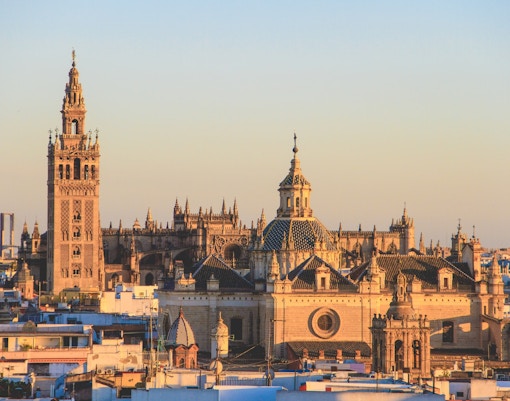
The former Almohad Mosque
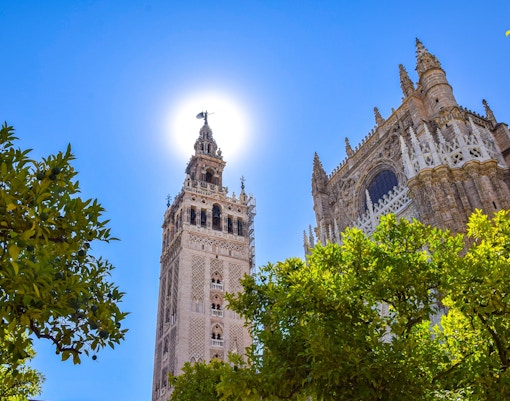
The La Girlada's design inspiration
The La Giralda, the Seville Cathedral's bell tower, is the crowning glory of this attraction. It originally served as the minaret of the Almohad Mosque. Standing at 104 meters tall, it was built with Morocco's Koutoubia Mosque in mind-the reason behind some of its key similarities.
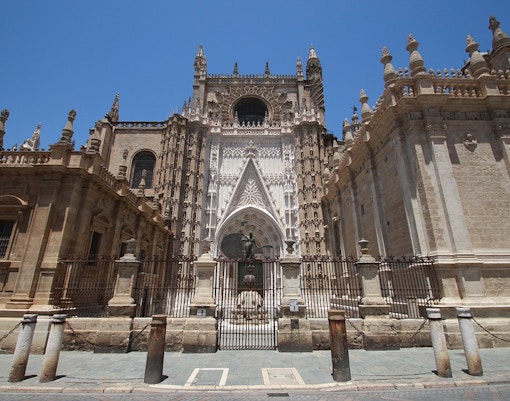
Restoration of the main dome
Over the years, the main dome collapsed twice, once in 1511 and again in 1888, but both times it was restored to its former glory. The cathedral was subjected to several refurbishments and extensions in different architectural styles, including Renaissance, Neo-gothic, Baroque, and more, becoming a unique architectural wonder.
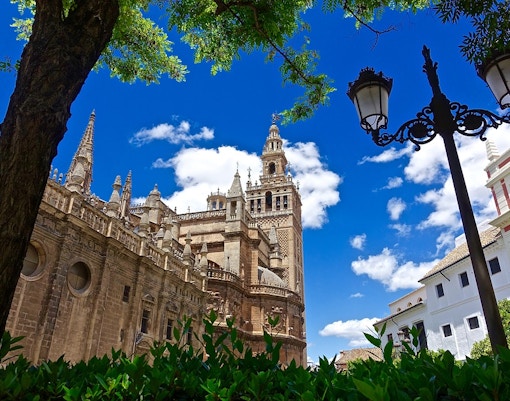
A UNESCO World Heritage Site
The Seville Cathedral was designated a UNESCO World Heritage Site along with the Alcázar of Seville and Archivo General de Indias in 1987. It's complex history, and the fact that it houses Christopher Columbus' tomb, among several other aspects, led to its recognition as a cultural icon.
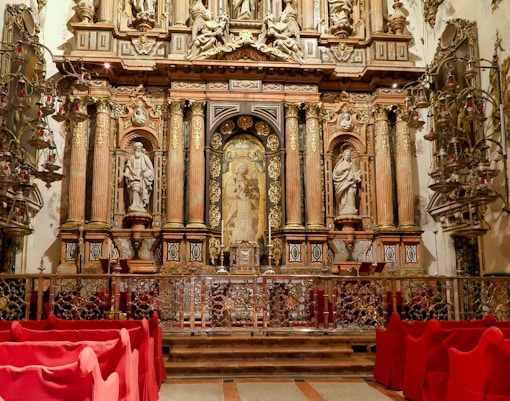
The world's largest Gothic cathedral
Upon its completion in the early 16th century, the Seville Cathedral surpassed Hagia Sophia in Istanbul to become the largest cathedral in the world. It's also the fourth-largest church in the world.
- Total area: 11,520 square meters
- Length: 135 meters
- Width: 76 meters
- Maximum height in transept: 42 meters
- La Giralda's height: 104.5 meters
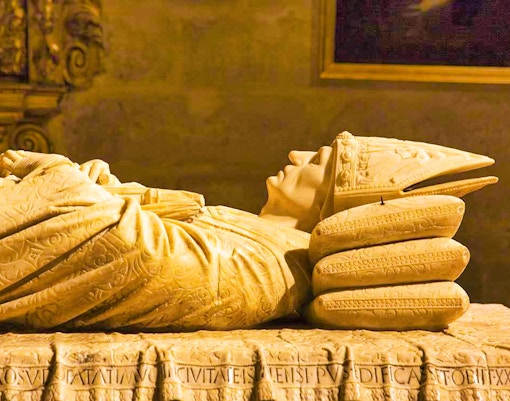
Chapels & tombs
The Seville Cathedral is home to 80 different chapels including Capilla Real, or the Royal Chapel. According to the official reports, a total of 500 masses were conducted daily in all the chapels in the 19th century. Additionally, many famous people have been buried in a few of the chapels, including:
- Fernando III of Castile
- Elisabeth of Hohenstaufen
- Alfonso X of Castile
- Christopher Columbus & Ferdinand Columbus
- María Díaz de Padilla
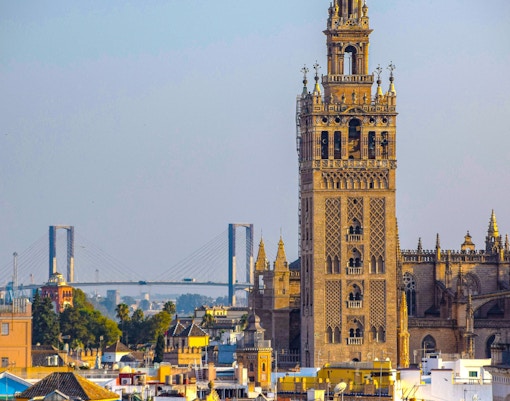
La Giralda
The Seville Cathedral bell tower, the La Giralda, is one of its key attractions. Another interesting tidbit is that this bell tower was originally built as a minaret of the Almohad Mosque between 1184 and 1198. After Reconquista, it was converted into a bell tower with a Renaissance-style top. In the 16th century, the El Giraldillo-a statue-cum-weather-vane, was added to represent faith in Christianity. The tower is 104 meters tall and has been of the most important symbols of Seville since medieval times.
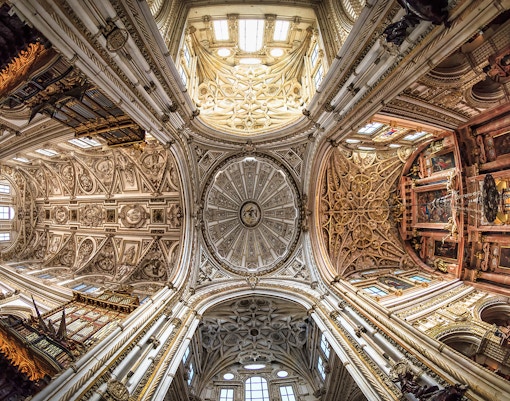
Legends
According to local tradition, the cathedral members said ‘Hagamos una Iglesia tan hermosa y tan grandiosa que los que la vieren labrada nos tengan por locos’, which meant was to build a church that is so beautiful and majestic so that anyone who sees it after its completion will think the members of the cathedral mad. The original entry from 8th July 1401, also included ‘una tal y tan buena, que no haya otra su igual’ which translates to ‘a building so good that none can be its equal’.
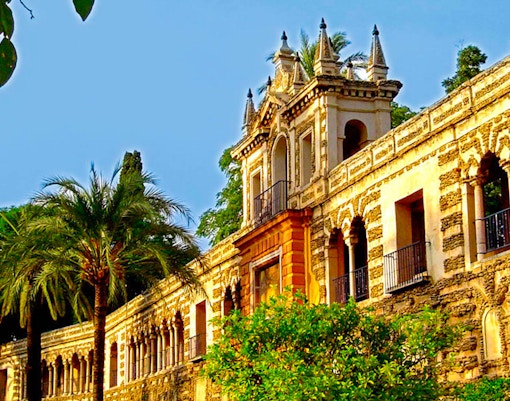
Islamic & Christian architecure
The Seville Cathedral's architecture is both beautiful and grand. It has 4 huge façades that combine to form 15 majestic doors. Since the cathedral was built in a Gothic architectural style, all the doors are beautifully ornamented. The decorations displayed different scenes from the life of Christ. The major doors are Door of Baptism, Assumption, Saint Michael, Saint Cristopher, Sticks, Bells, Conception, Lizard, Sanctuary, Forgiveness, Prince, Saint Miguel and Palos.
Book Seville Cathedral tickets & tours
Seville Cathedral & La Giralda Skip-the-Line Tickets

Audio guide
Combo (Save 8%): Alcázar of Seville + Seville Cathedral + La Giralda Tickets
Alcázar of Seville + Seville Cathedral + La Giralda Skip-the-Line Guided Tour
Book now, pay later
Seville Cathedral & La Giralda Small Group Skip-the-Line Guided Tour
Audio guide
Frequently asked questions about Seville Cathedral facts
The Seville Cathedral was built between 1401 and 1506 on the site of a former mosque. It's Moorish roots are evident in its architecture today.
The Seville cathedral replaced the Almohad Mosque after the Christians conquered Seville. It's primary minaret was transformed into a bell tower-the La Giralda.
According to the Seville Cathedral's history, it was constructed on the site of the Almohad Mosque. The mosque was built in the 12th century by the Moors who had conquered the Iberian peninsula. When the Catholic Kings of Spain reclaimed Seville, the mosque was destroyed in 1406 to build the famous Seville Cathedral.
The Seville Cathedral is a Roman Catholic Cathedral located in Seville, Andalusia, Spain. It's address is Av. de la Constitución, s/n, Casco Antiguo, 41004 Sevilla, Spain | Find on Google Maps
The Seville Cathedral is the largest Gothic cathedral ever built, showcasing the city's power and wealth. It was declared a UNESCO World Heritage Site in 1987.
Yes, the Seville Cathedral is the largest cathedral in the world and the fourth largest church. It is also the burial ground for many prominent figures such as Christopher Columbus, Ferdinando III of Castile, and more.
Several figures are buried in the Cathedral de Seville including Christopher Columbus and his son Ferdinand Columbus, Fernando III of Castile, Maria Diaz de Padilla, Alfonso X of Castile, Pedro I of Castile, and more.
The Seville Cathedral was inaugurated on 6th October 1506, after more than a century of construction that began in 1401.
The bell tower of Cathedral de Seville was originally the minaret of the Almohad Mosque. After the construction of the cathedral, this bell tower was called 'Giralda'.
Of the Great Almohad Mosque, the Sevilla Cathedral features the minaret-converted-bell tower named the La Giralda-one of the main attractions of the cathedral. Besides the bell tower, the Patio de los Naranjos or the Patio of the Orange Trees, the Moorish gate, and Puerta del Pardon were also originally a part of the mosque.
