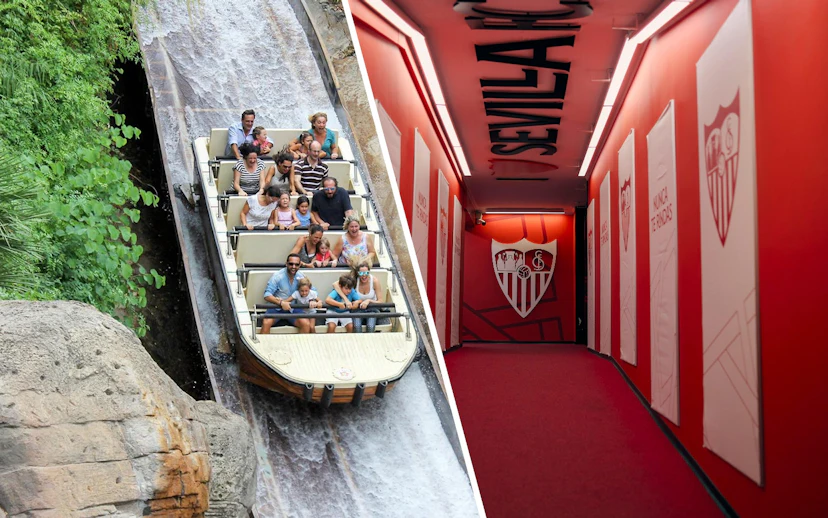
Planning to visit Sevilla FC Stadium? Here's your complete guide
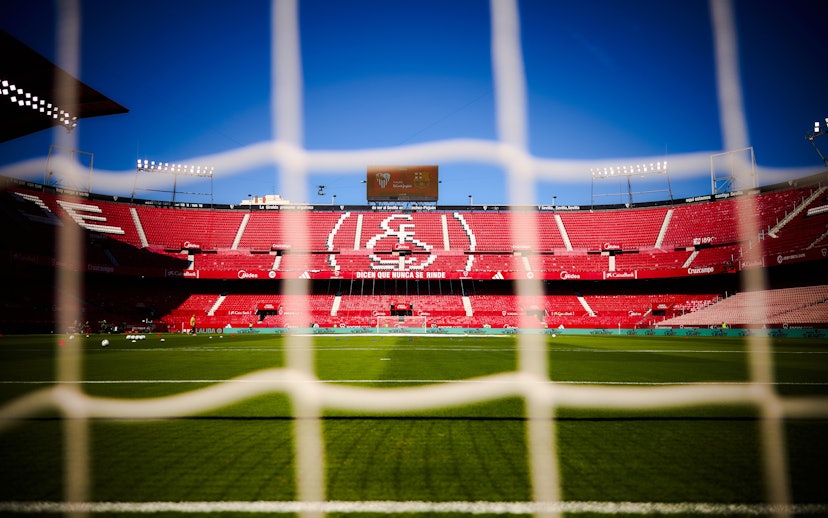
Ramón Sánchez-Pizjuán has been Sevilla FC's home since 1958, and locals still call it "La Bombonera de Nervión" for the cauldron-roar it generates on European nights. The tour is self-paced with a phone audio guide, and the route from the History Experience museum to the pitch takes an hour. This guide covers timing, tickets, the route, and the on-the-day details that matter.
Sevilla FC has confirmed that demolition begins in June 2027, after which the club moves to La Cartuja for three seasons during the rebuild. If walking the original "Pizjuán" matters to you, the 2026-27 season is your window.
Quick overview: Ramón Sánchez-Pizjuán Stadium at a glance
If you want the short version before booking, start here.
- When to visit: The tour runs from Monday to Sunday, except on every Tuesday. Wednesday afternoons, Thursday, and Friday mornings stay noticeably calmer than weekend afternoons.
- Getting in: Self-guided entry with the audio guide app starts from €14. Bookings stay open until 15 minutes before each slot if places remain. Tickets are typically non-refundable, so confirm your date before paying.
- How long to allow: 45 minutes to an hour for most visitors. Sevillistas, families, and panel-readers stretch it closer to 90 minutes.
- When to go: Thursday or Friday at 11am is the calmest slot of the week. Most tourists head to the Cathedral and Alcázar in the morning and arrive in Nervión only after lunch.
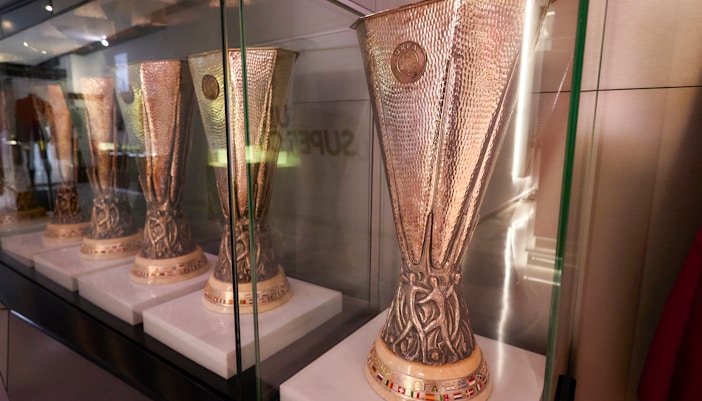
- What most people miss: The full seven-trophy Europa League cabinet (Sevilla FC holds the all-time competition record) and the press-room podium photo.
Tip: Semana Santa (March 21 to 28, 2027) and Saturday evenings sell out hours, not days, in advance. Book before the time you want is gone.
Jump to what you need
Where and when to go
Which Sevilla FC Stadium tour ticket is best for you?
| Ticket type | What's included | Best for | Price range |
|---|---|---|---|
Standard tour | Stadium tour + museum entry + audioguide | A self-paced first visit at your own rhythm, with no fixed group schedule | |
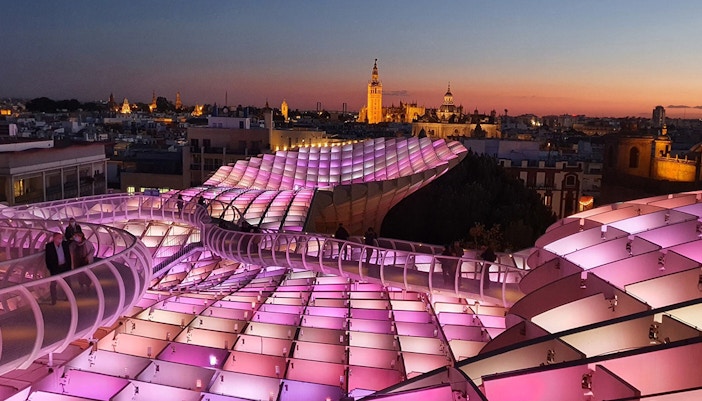
Combo: Stadium + Setas de Sevilla | Sevilla FC tour + Setas de Sevilla panoramic walkway and viewpoint | Pairing the football side of Seville with the city's most photographed modern landmark | |
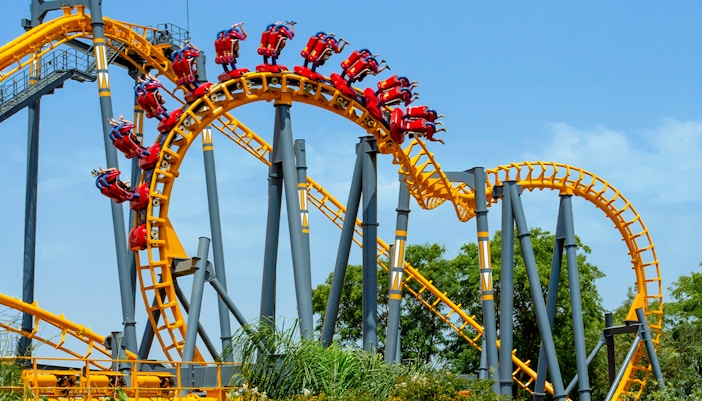
Combo: Stadium + Isla Mágica | Sevilla FC tour + full-day Isla Mágica theme park entry | Family days mixing the stadium morning with a full afternoon of rides |
How do you get around Sevilla FC Stadium?
Must see attractions in Sevilla FC Stadium
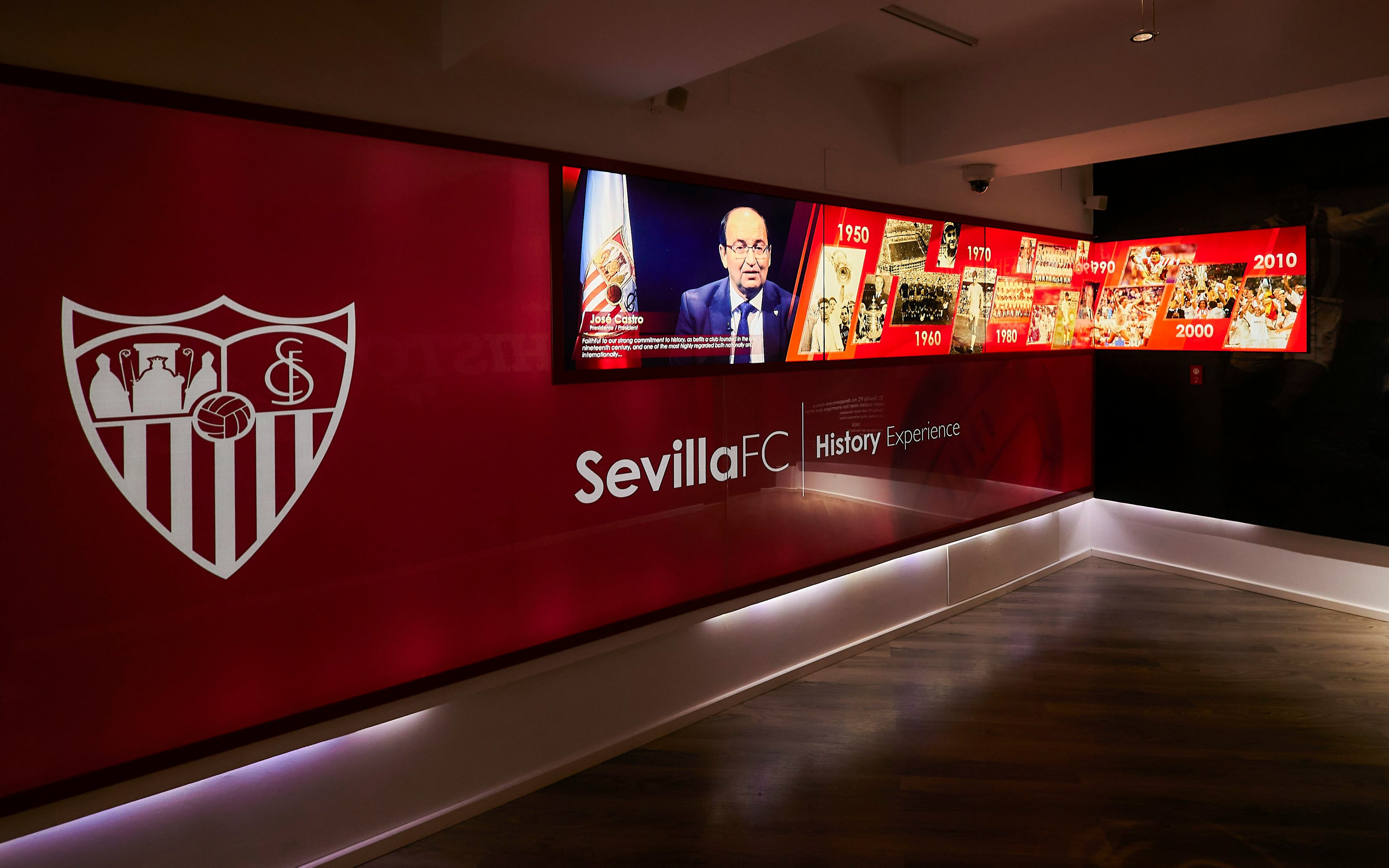
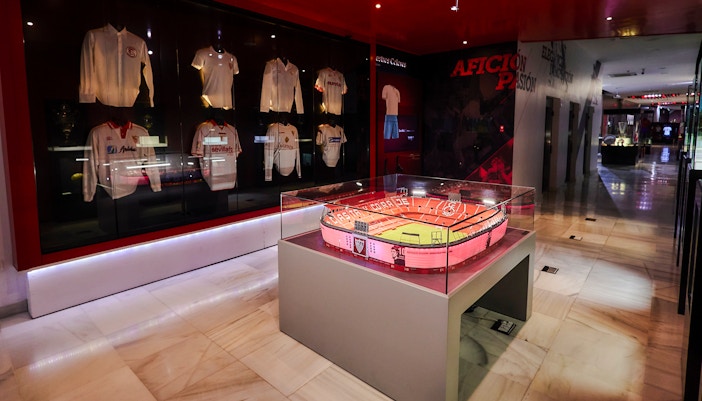
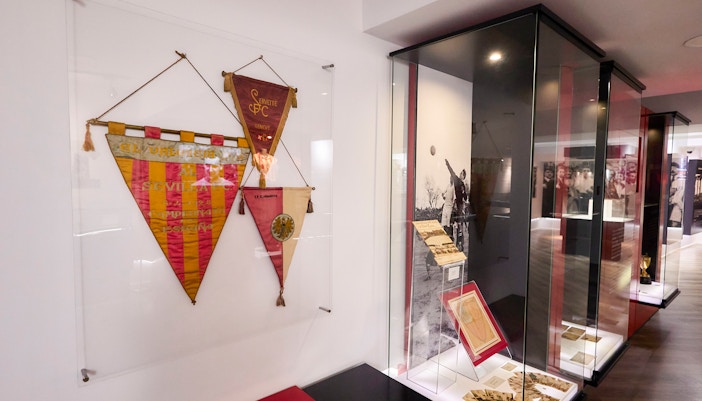
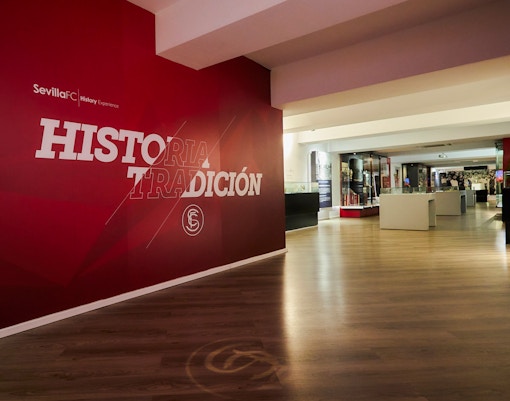
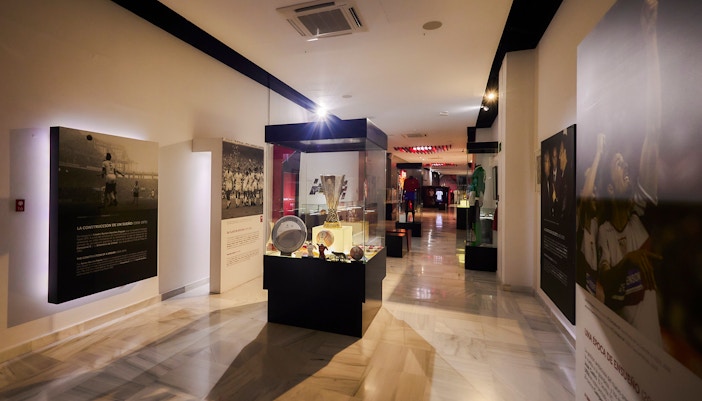
Sevilla FC History Experience Museum
Type: Interactive football museum
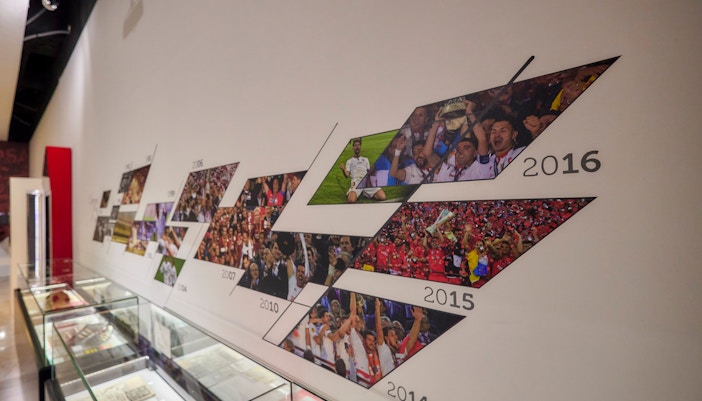
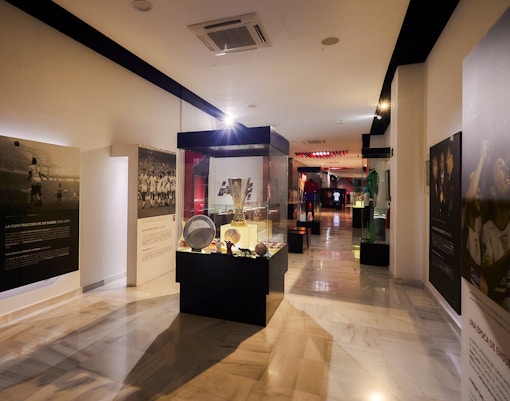
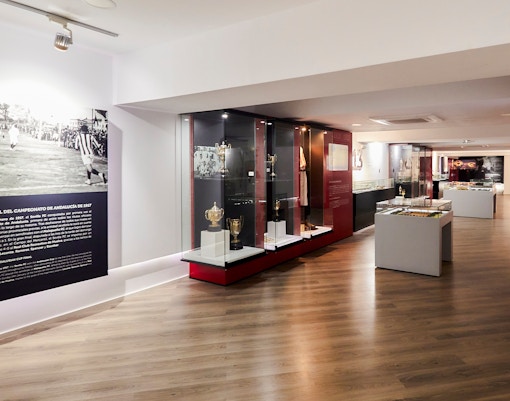
The club's story from its 1890 founding (the first organised football match in Spain, vs Recreativo de Huelva) through the 1945-46 Liga title, the Copa del Rey years, and the modern European era. Interactive screens are the best part.
Where to find it: At the start of the standard tour route, before the VIP and pitch-access sections.
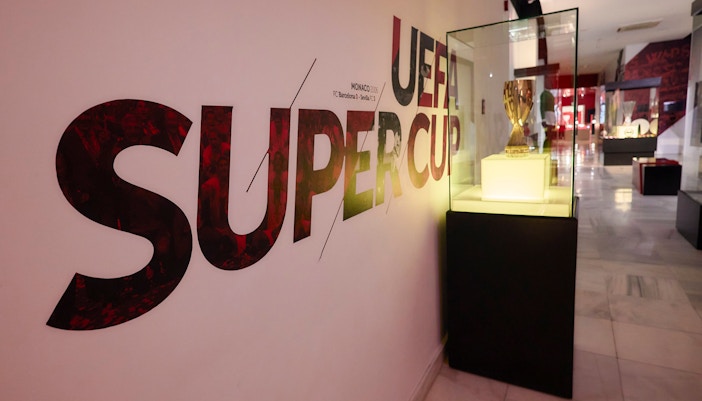
Europa League trophy display
Type: Trophy gallery
The room most fans book the tour for. All seven titles in chronological order: 2006, 2007, 2014, 2015, 2016, 2020, and 2023 (beat Roma on penalties in Budapest). No other club has won it more times.
Where to find it: Inside the museum’s main honors and history section.
Presidential box and press room
Type: VIP and media access
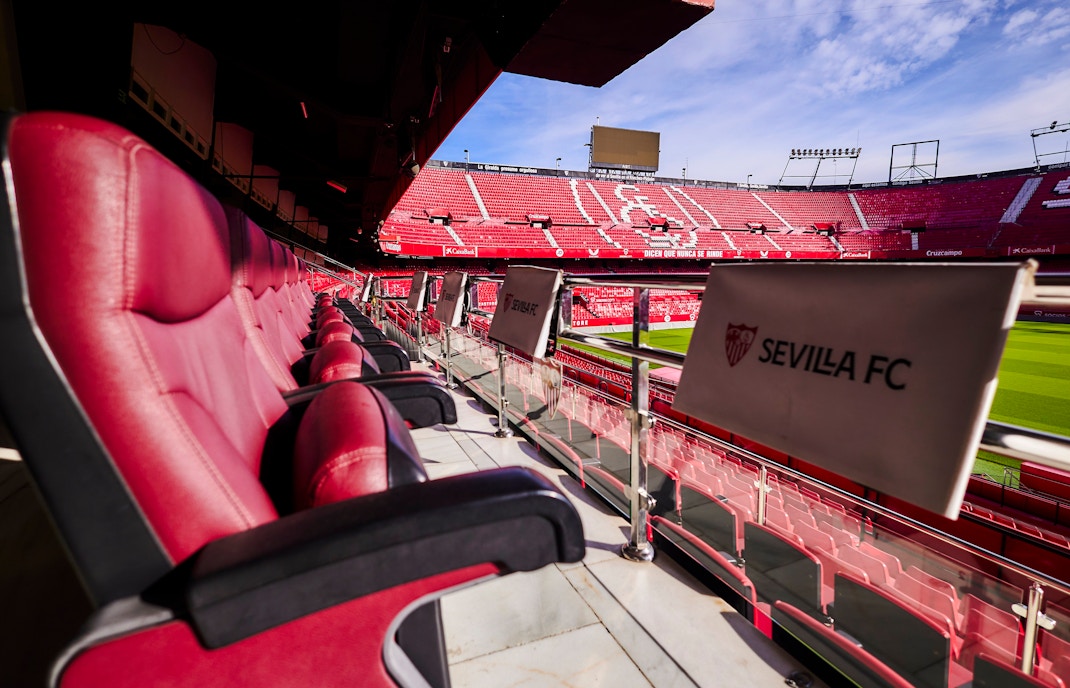
The matchday view for the club president, directors, and visiting officials. Elevated, mid-field, full bowl visible. The podium and crest backdrop are used after every match, every new signing, every press conference. Sit down and take the "new signing" photo: the most reliable shot on the route.
Where to find it: Mid-route, before the dressing room and tunnel sections.
Players' dressing room and tunnel
Type: Team facility
The first-team locker room opens onto the tunnel to the pitch. The "Himno del Centenario" plays through the speakers as you walk it. The emotional centre of the visit for most fans.
Where to find it: After the VIP and press areas
Pitchside and dugouts
Type: Field-level viewpoint
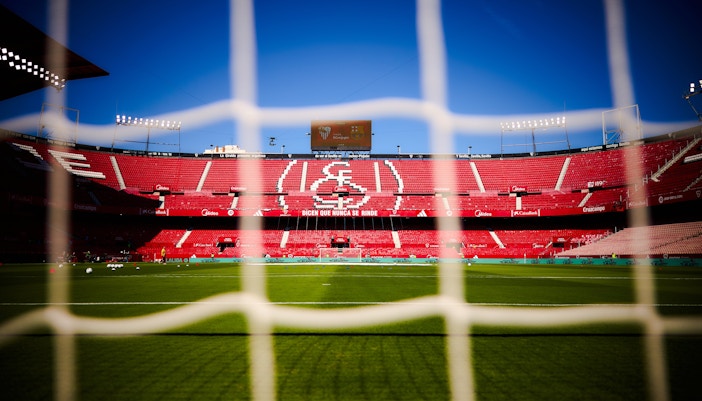
Sit on the home bench, look up at the steep stands that give the Bombonera its name, and frame your wide-angle photos here. Pitchside only: you cannot walk on the grass.
Where to find it: At the end of the route, after the tunnel walkout.
Facilities and accessibility
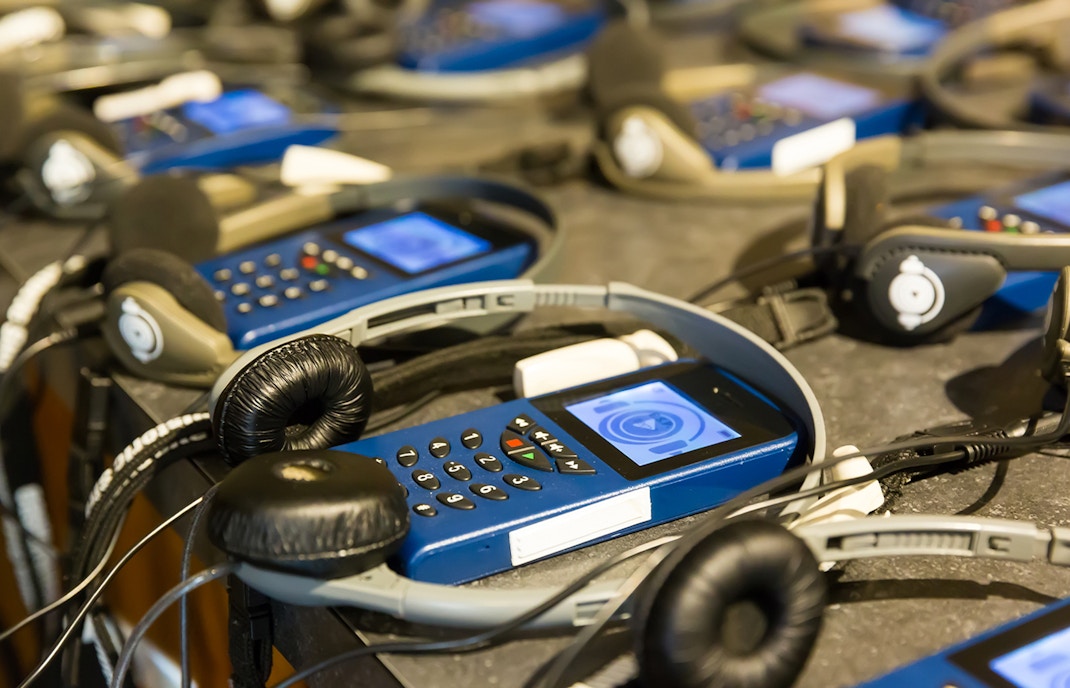
- Audio guide: A multilingual audioguide is included and is the main way most visitors move through the route without needing a live guide.
- Gift shop / merchandise: The official Sevilla FC store sits at the end of the route and is the place for jerseys, scarves, and custom shirt printing.
- Seating / rest areas: The Presidential box, press room, and dugout areas all give you short seated pauses during the visit rather than one dedicated rest lounge.
- Parking: There is no dedicated tourist parking at the stadium, but paid parking at nearby Nervión Plaza is the most practical option on non-matchdays.
- Mobility: Most of the route is accessible, elevators are available for upper levels, and staff can help with ramps where pitchside steps create a barrier if you notify ahead.
- Visual impairments: The audioguide provides the main interpretive content, which helps more than the physical signage alone if you want fuller context during the route.
- Cognitive and sensory needs: The loudest part of the experience is the tunnel walkout with anthem and crowd sound, so weekday mid-mornings are the easiest low-pressure option.
- Families and strollers: The self-paced route is workable for families, and the elevator access makes the experience easier with strollers than many older stadium tours.
The tour suits families well because the route is short, self-paced, and physically varied (museum, tunnel, dugouts, store).
- Realistic time with younger kids: 45 to 60 minutes, not 90.
- What kids respond to most: the Europa League trophy room, the anthem-backed walk through the tunnel, and sitting on the home bench in the dugout where Sevilla's first-team coach sits on matchday.
- Engagement tip: Let them lead the museum's interactive screens. They're built for this age group and tend to be ignored by adult visitors.
- Logistics: Bring a small bag, not a full nappy backpack. Book the 11am morning slot for the calmest visit and the easiest exit to lunch in Nervión Plaza.
- After visit: The Sevilla FC store at the end is the natural finish for kids who want a name-and-number shirt.
Rules and restrictions
Practical tips
- Booking and arrival: Most visitors book within 48 hours of visiting, but spring weekends and August night tours are worth locking in a few days ahead; arrive 10–15 min early because slots are released in 15-minute intervals.
- Pacing: Give the museum 25–30 min before you move on, because once you reach the dressing room and tunnel, most people speed up and rarely circle back mentally to the club’s history.
- Crowd management: Weekday mid-morning works best here because the museum feels less compressed and you won’t wait as long for dugout and press-room photos.
- What to bring or leave behind: Bring a charged phone and headphones for the audioguide, and keep bags small so the tighter interior spaces feel easy to navigate.
- Food and drink: Eat before or after the tour rather than trying to build a break into it; the route is only about 75–90 min, and Nervión Plaza next door is the most practical stop once you finish.
- Summer heat: July and August afternoons regularly hit 40°C. Book the 11am slot rather than 4pm if you can, since the walk to the metro at 2pm is far more bearable than at 6pm.
- Closures: Due to maintenance, the locker rooms are closed in June, so book accordingly if that matters to you.
What else is worth visiting nearby?
Eat, shop and stay near Ramón Sánchez-Pizjuán Stadium
- On-site: The standard tour does not include a designated food stop, and the 45 to 90-minute route isn't long enough to need a break inside. Most visitors eat before or after.
Better options nearby:
- Nervión Plaza shopping centre (2-min walk, Av. Luis de Morales): Food court with Spanish chains, burger spots, sushi, plus a few sit-down restaurants.
- La Brunilda Nervión (10-min walk): The Nervión branch of the well-known Seville tapas group. Worth booking ahead at lunch if you want a sit-down meal rather than a quick stop.
- Casa Manolo León (8-min walk): A more polished Andalusian option for visitors making a meal part of the day.
Pro tip: If your tour slot is at 4pm or 5pm, eat lunch before the tour, not after. Spanish dinner service in Nervión doesn't really begin until 8:30pm, and you'll find very few kitchens open in the 5pm to 8:30pm window.
- Sevilla FC Official Store: This is the main shopping stop, with jerseys, scarves, and customizable club gear at the end of the tour route.
- Nervión Plaza: If you want a non-football shopping stop afterward, the mall next door is the easiest place to continue without adding travel time.
The streets around the stadium are quiet and residential. Hotels here are mostly chain or business-focused, with cheaper rates than the old town but a thinner restaurant and walking scene. Fine for a one-night football-focused stay, less suited as a base for a broader Seville trip.
- Price point: Cheaper than the historic centre, especially during non-matchday weekends.
- Best for: Visitors here primarily for a Sevilla FC matchday or the stadium tour, who want minimal logistics on the day.
- Consider instead: Barrio Santa Cruz or El Arenal in the historic centre, 10 minutes by taxi or one metro line away, with a far better walking and dining scene if you're staying more than one night.
Frequently asked questions about visiting Ramón Sánchez-Pizjuán Stadium
Most visits take 75–90 minutes. If you’re a Sevilla FC fan, traveling with children, or planning lots of photos in the tunnel, press room, and dugouts, it can stretch closer to 2 hours.
Not always, but it's the safer move during Semana Santa, weekend evening slots, and the days following European home wins. Bookings stay open until 15 minutes before each slot if places remain, so last-minute can work, just not as a guarantee.
Arrive 10–15 minutes early. That gives you enough time to find the tour access point, sort your ticket, and start with your assigned slot instead of playing catch-up with a moving route.
A small bag is the easiest option. Large luggage is awkward on this route because you’ll move through museum galleries, interior rooms, and restricted stadium spaces rather than staying in one open hall.
Yes, photos are a big part of the experience except for flash in the museum, press room, VIP areas, tunnel, and dugouts. The main limit is the grass itself; you can go pitchside, but not normally onto the field.
Yes, it works well for families because the route is short, self-paced, and interactive. Children usually respond best to the trophy displays, the tunnel walkout, and the chance to sit in the dugouts.
It is mostly accessible rather than fully barrier-free in every corner. Elevators serve upper levels, and staff can help with ramps where pitchside steps create difficulty, so it’s worth notifying the venue in advance if you need step-free support.
Yes, the easiest food stop is in the streets around the stadium or at Nervión Plaza next door. Most visitors eat before or after because the standard route is short and not really designed around a meal break.
Sometimes no, and sometimes only with route changes or reduced hours. Matchdays and major club events can shorten or fully cancel the tour, so the safest approach is to choose a non-matchday if the stadium visit is important to you.
For the 2026-27 season, yes, the tour runs as normal. Demolition is scheduled for June 2027, after which Sevilla FC will play at La Cartuja for three seasons during the rebuild, with the new "Nuevo Pizjuán" set to open in 2029. This is the last window to walk the original Ramón Sánchez-Pizjuán before that change.
No, the tour is closed every Tuesday in addition to all matchdays and major club events. Midweek the only opening is Wednesday from 4pm to 8pm. The Tuesday closure is the most common scheduling mistake first-time visitors make, so plan around it before locking in your Seville dates.