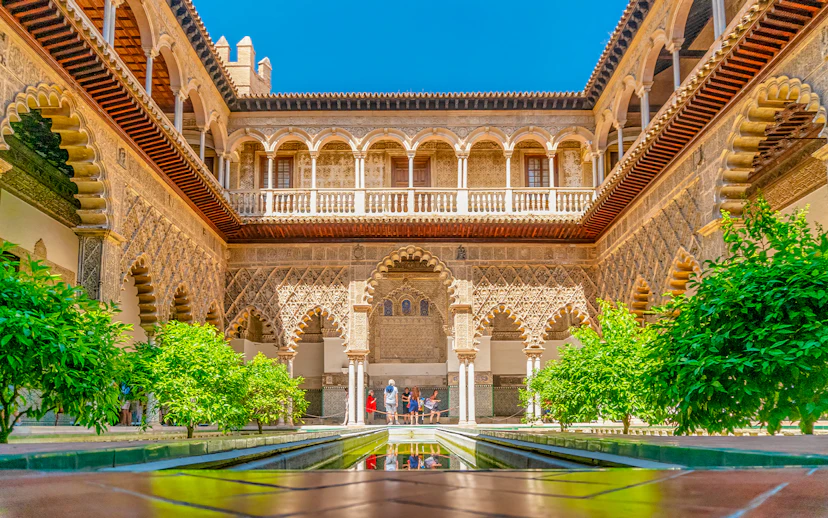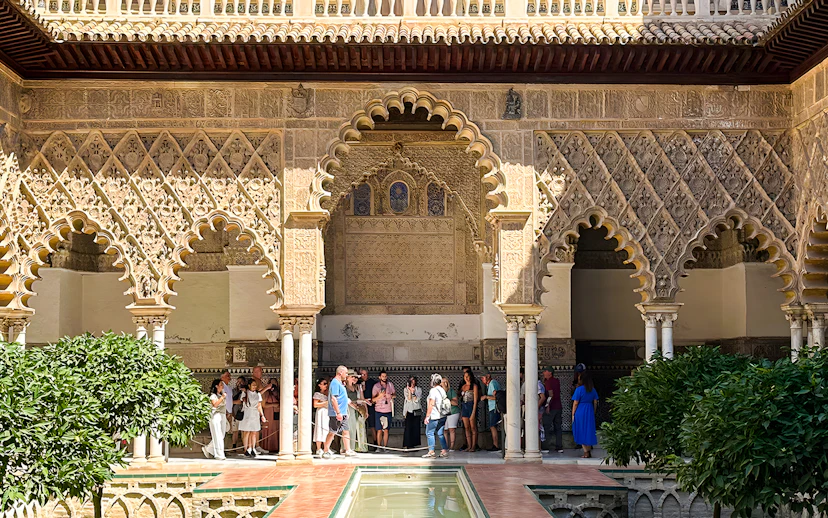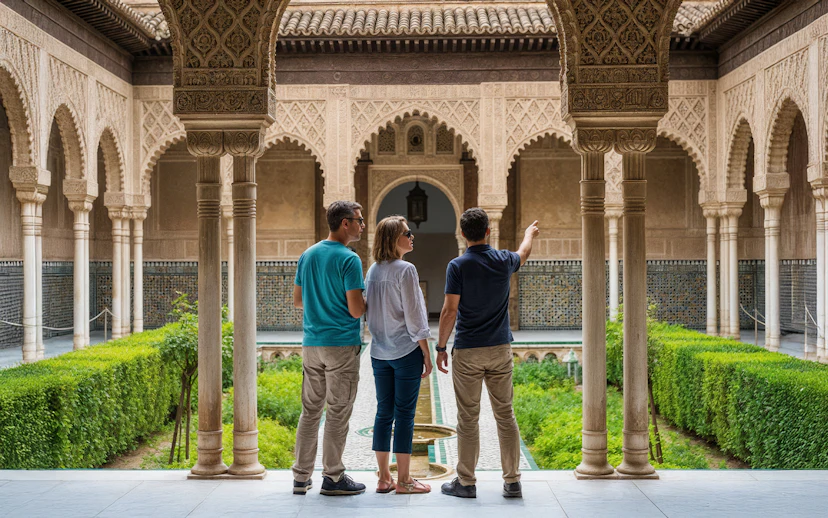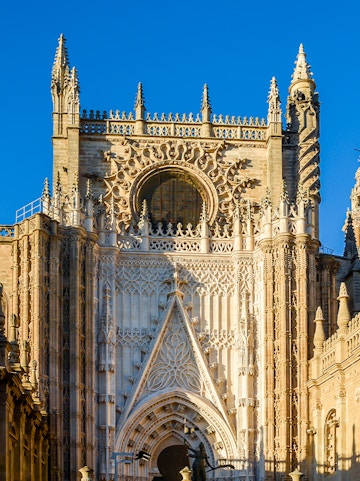



Aim for the first timed entry on a weekday, or the last 90 minutes before closing. The room is calmest then, so you can stand under the dome without constant foot traffic. Skip late-morning slots if you want space to look up properly.
Salón de los Embajadores Tickets
Included with Alcazar of Seville tickets
Timings
RECOMMENDED DURATION
2 hours
Top things to do in Seville
Quick overview
- Access: Included in all Royal Alcázar of Seville tickets
- Separate ticket: Not required
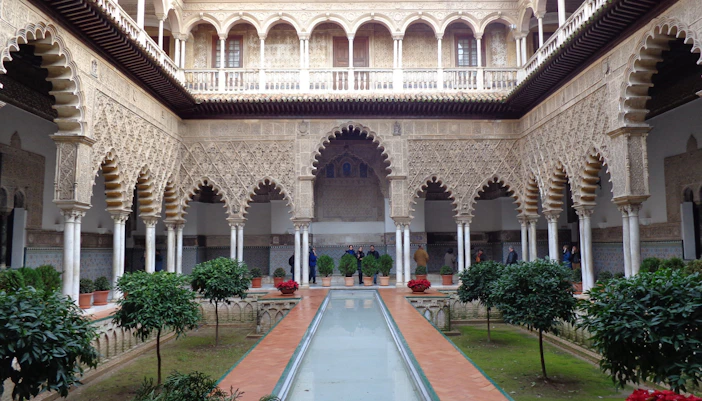
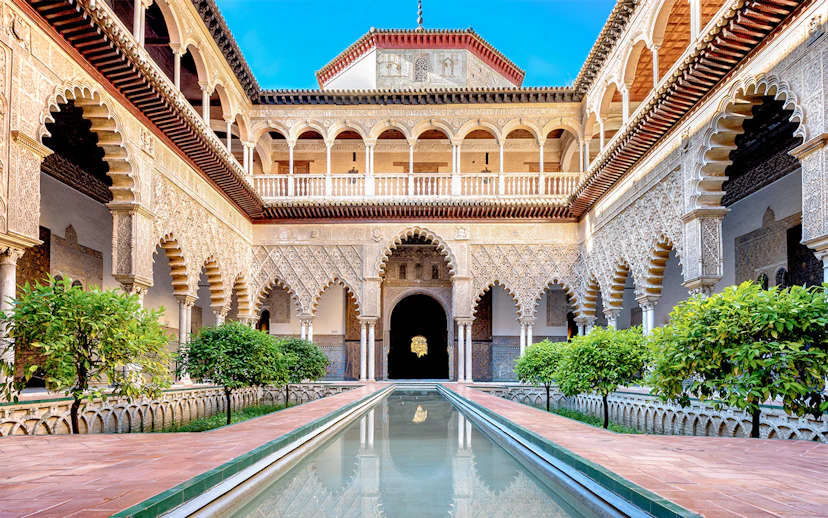
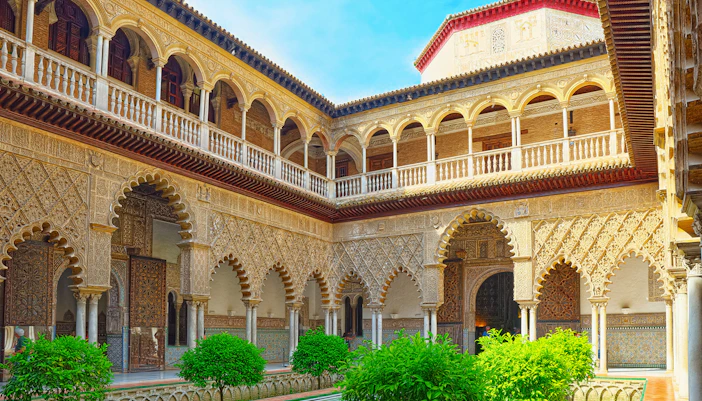
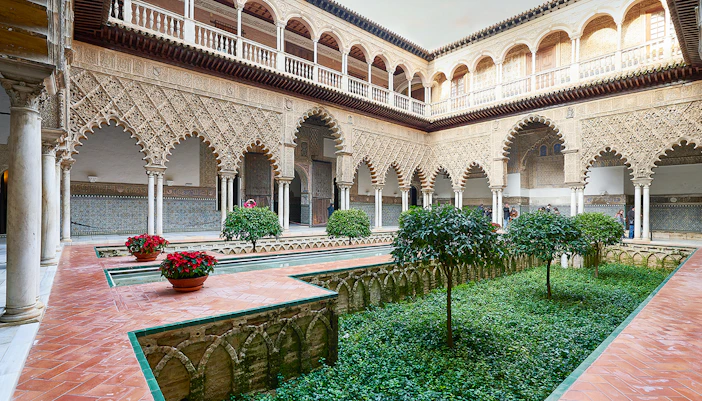
- When you'll see it: Midway through the palace interiors, after Patio de las Doncellas
- Visit duration: 10–15 mins self-guided/15–20 mins with guide
- Best time: First entry slot on a weekday or the last 90 minutes of the day, when the room is easier to read from the center
- Restrictions: No flash photography, tripods, or selfie sticks; stay behind barriers

Salón de los Embajadores is included with all Royal Alcázar of Seville tickets. No separate ticket is needed. You usually reach it midway through Pedro I’s Palace, after the Courtyard of the Maidens, and you can’t access it directly without following the main interior route. Book a skip-the-line guided tour or small-group visit if you want the dome, inscriptions, and court symbolism explained before the room gets crowded.
How to best experience Salón de los Embajadores
Best time to visit
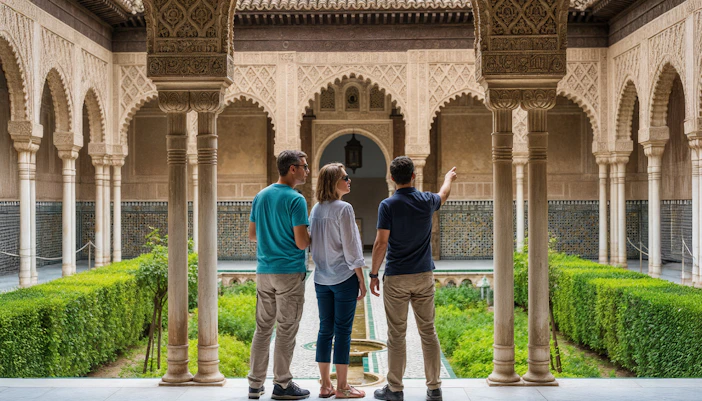
How long to spend
Give yourself 10–15 minutes on your own, or 15–20 minutes with a guide. That’s enough to study the dome, arches, and tilework from more than one angle. If you only stop for a quick photo, you’ll miss how the room is structured.

Where it fits in your itinerary
You normally reach this hall after Patio de la Montería and Patio de las Doncellas, before moving on to nearby palace rooms and then outward toward courtyards or gardens. Budget about 20–30 minutes from the entrance. Don’t burn through the earlier rooms too fast.

Crowd patterns
Bottlenecks build fastest from about 11am to 1:30pm, especially when guided groups converge inside Pedro I’s Palace. At peak times, the center becomes stop-and-go and doorways clog up. Earlier and later visits give you cleaner sightlines across the room.

What to prioritize if time is short
First, stand directly under the dome and look straight up. Then move to one side and read the room horizontally through its arches, plaster, and tile base. If you’re cutting time somewhere, cut it from the gardens, not from this hall.

Common mistakes to avoid
Most visitors look only at the ceiling, then leave. Also study the lower walls, inscriptions, and the shift from tile to stucco to wood. Avoid standing in the doorway for long; you’ll block the flow and lose the best central perspective.
Best tickets to experience Salón de los Embajadores
| Ticket type | Why choose it |
|---|---|
Timed entry ticket | Best if you want to linger independently and study the room at your own pace. |
Skip-the-line guided tour | Best if you want the throne-room symbolism decoded while moving efficiently through the palace. |
Small-group guided tour | Best for calmer viewing, more questions, and less crowd pressure inside this compact room. |
Why it's worth seeing
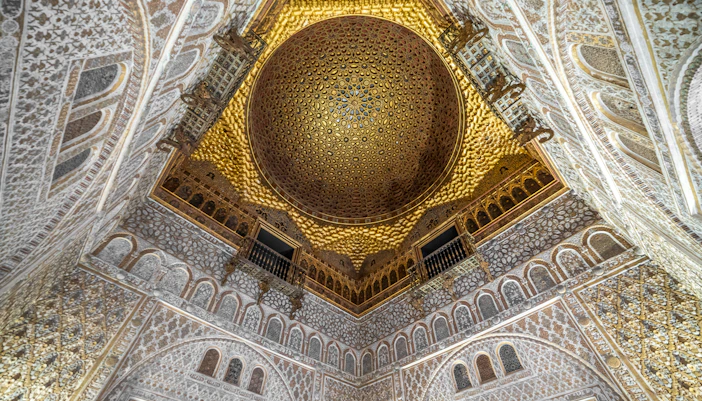
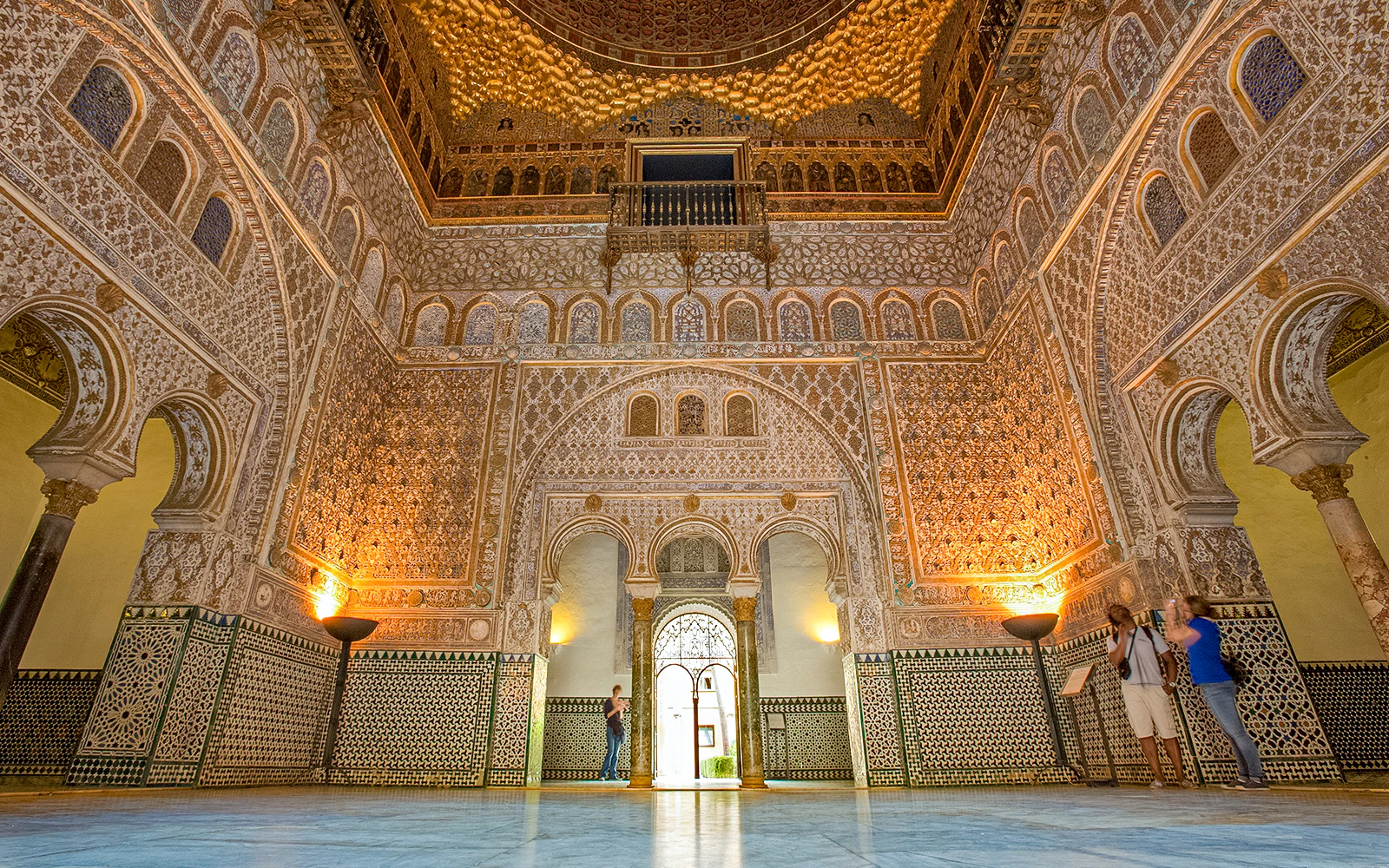
The Salón de los Embajadores is the room where the Royal Alcázar compresses power, ceremony, and craftsmanship into one space. Most visitors notice the dome first, but the hall is designed in vertical layers, from tile to stucco to carved wood, so your eye is meant to move upward in stages. If you know where to look, this room reads less like decoration and more like a political statement in architecture.

The dome: start from the center
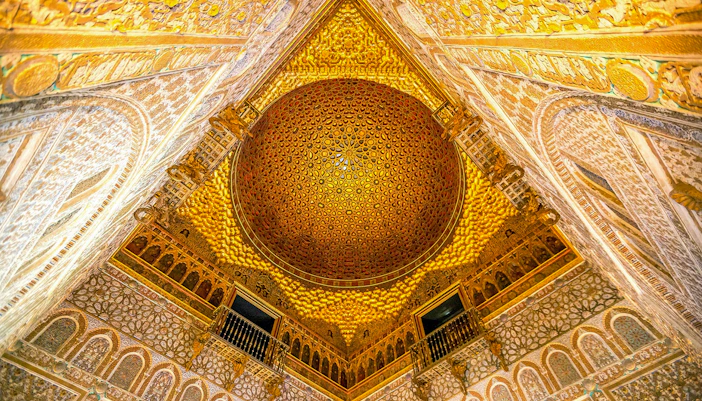
Stand in the middle of the room and look straight up. The gilded wooden dome is built as a celestial half-sphere, with star geometry radiating outward. It turns a throne room into an image of ordered heaven, not just a decorative ceiling.

The arches and inscriptions: read the room sideways
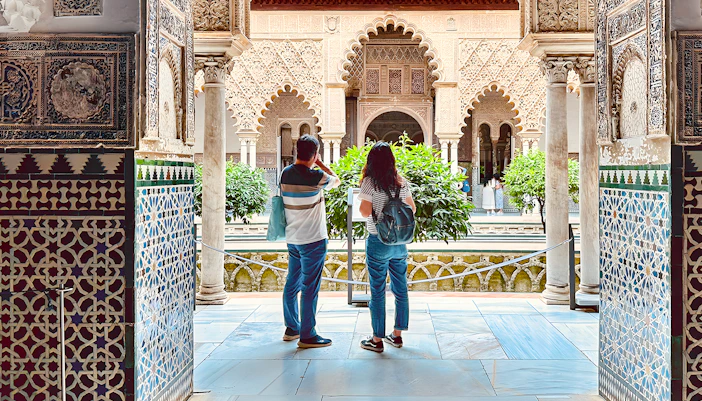
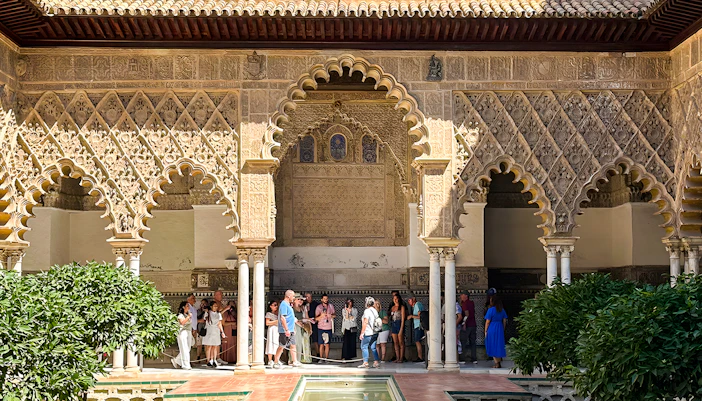
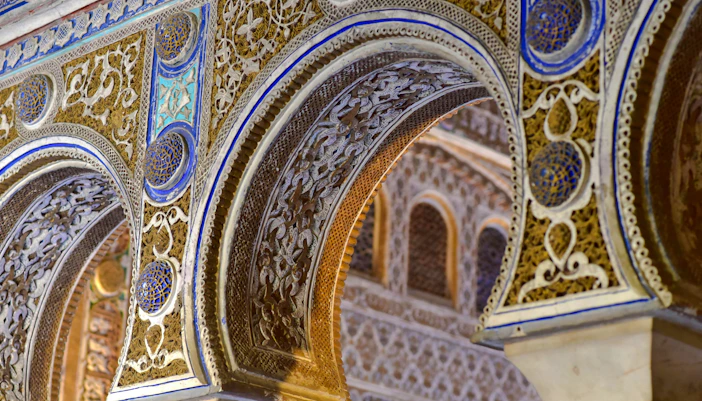
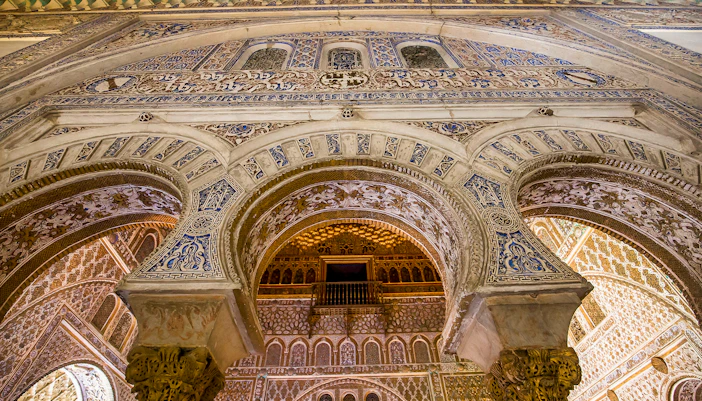
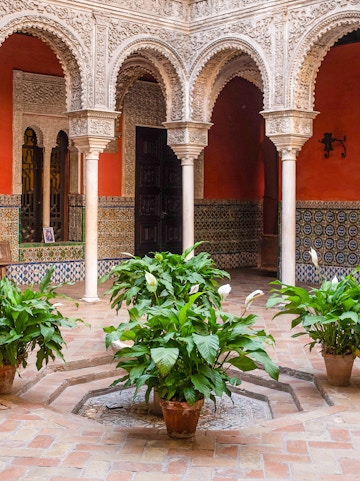
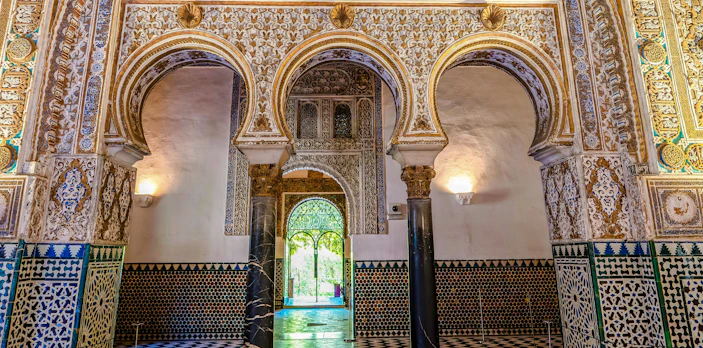
Move to one side opening and look across rather than upward. The horseshoe arches, carved plaster, and inscriptions frame the space in repeating layers, drawing your eye back to the center and reinforcing the room’s ceremonial balance.

The tile base and balconies: don’t stop at eye level
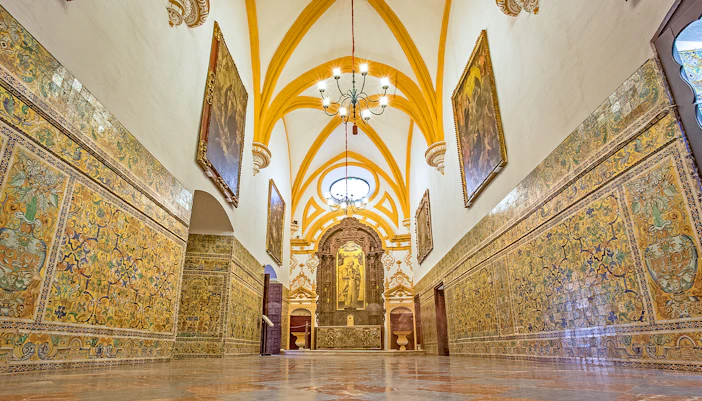
Before you leave, look down to the tile dadoes and then back up to the small upper balconies. That lower-to-upper sequence shows how Mudéjar craftsmen stacked color, texture, and light to control how the room is experienced.
Historical and cultural significance
Built as the ceremonial heart of Pedro I’s 14th-century Mudéjar palace, the Salón de los Embajadores was designed as a throne room where royal authority was staged through architecture as much as ritual. In 1526, Charles V married Isabella of Portugal here, giving the room a second life as a dynastic setting, not just a court chamber. Today, you see it inside a royal complex still used by the Spanish crown on state occasions.
👉 Explore the full history of the Royal Alcázar of Seville
Notable figures
Peter I of Castile | Patron
Commissioned Pedro I’s palace and made this hall its symbolic center of power.
View Wikipedia
Charles V | Emperor
Married Isabella of Portugal here in 1526, fixing the room in royal memory.
View Wikipedia
Isabella of Portugal | Empress
Her wedding here turned the hall into a Habsburg ceremonial landmark.
View Wikipedia
Diego Ruiz | Master carpenter
Credited with the great wooden dome that defines the room’s celestial effect.
View Wikipedia
Know before you go
- Summer hours: Typically 9:30am–7pm from April to September
- Winter hours: Typically 9:30am–5pm from October to March
- Last entry: Usually 1 hour before closing
- Free entry: Mondays during the final hour, with advance online reservation and limited availability
Address: Patio de Banderas, s/n, 41004 Seville, Spain
- Nearest transit: Puerta de Jerez metro and tram stop, about 5 minutes on foot
- Entry point: Enter through Puerta del León, the main visitor gate
- Position in route: Inside Pedro I’s Palace, usually reached 20–30 minutes after entry
- Direct access: Not possible; you must follow the main palace route to reach it
- Wheelchair access: The Alcázar’s main visitor route is wheelchair accessible
- Step-free route: Ramps and elevators are available within the monument
- Salon access: The hall itself sits on the main palace route and is generally level
- Nearby limits: Some other Alcázar areas, including the upper rooms and baths, involve stairs
- Mobility aids: Strollers are allowed, and assistance animals are welcome with documentation
- Photography: Non-flash photography is generally allowed; flash, tripods, and selfie sticks are not
- Barriers: Stay behind ropes and do not touch plaster, tile, wood, or inscriptions
- Bags: Large bags, luggage, and trolleys are not allowed inside
- Food and drink: Not permitted inside the monument, except water and baby food
- Security: Airport-style screening is mandatory at entry, and re-entry is not allowed after validation
Frequently asked questions about Salón de los Embajadores
Yes. Entry is included with every valid Royal Alcázar of Seville ticket. No separate ticket exists.
No. Any Alcázar ticket includes it. The difference is whether you want independent pacing, an audio guide, or a guided explanation.
No. It has no independent entrance and is reached through the main palace route inside Pedro I’s Palace.
Usually midway through the interior route, after Patio de las Doncellas. Allow about 20–30 minutes from the main gate.
Plan 10–15 minutes self-guided or 15–20 minutes with a guide. The room rewards standing still and looking carefully.
Yes. It’s included in Alcázar guided tours. A guide helps decode the dome, inscriptions, and ceremonial symbolism quickly.
Usually, yes. Access can still change because of restoration, official events, or crowd-control measures inside the palace.
Usually, yes, without flash. Tripods, selfie sticks, and flash photography aren’t allowed inside the Alcázar.
Yes. The room sits on the Alcázar’s accessible main route. Staff can direct you to ramps and elevators if needed.
Yes, if you want symbolism and historical context. Self-guided visits work well for photos and slower browsing.