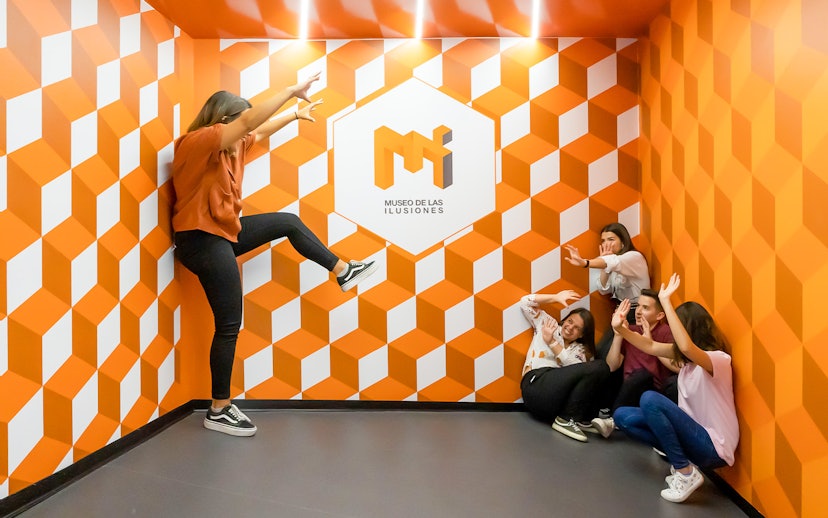
Museum of Illusions Seville visitor guide
The Museum of Illusions Seville is a short, high-interaction indoor attraction built around 60+ perception tricks, photo setups, holograms, and disorienting illusion rooms. It’s easy to underestimate because the visit is compact, but that’s exactly why timing and pacing matter — rush through the photo rooms and you’ll miss the exhibits that actually explain how the illusions work. This guide helps you plan your timing, ticket choice, route, and practical details before you go.
Quick overview: Museum of Illusions Seville at a glance
If you want the fast version before booking, here’s what actually changes the visit.
- When to visit: Earlier slots usually make a short visit easier to fit into a larger Seville sightseeing day, while weekend afternoons and holiday periods are more likely to feel slow around the busiest photo setups.
- Getting in: Standard entry is the main option here, and timed entry is the simplest way to slot a short visit into the rest of your day.
- How long to allow: 45–60 mins works for most visitors, but photo-heavy visits or time spent retrying interactive exhibits can easily push the visit closer to 75–90 mins.
- What most people miss: Many visitors rush past the exhibits that explain how perception is manipulated, and the gift shop is worth a quick stop for illusion-themed puzzles and souvenirs.
- Is a guide worth it? Probably not — this is a compact, self-guided visit, and standard entry is usually all you need.
Jump to what you need
🕒 Where and when to go
🗓️ How much time do you need?
🎟️ Which ticket is right for you?
🗺️ Getting around
🌀 What happens inside
♿ Facilities and accessibility
Where and when to go
How do you get to Museum of Illusions Seville?
- Address: Information unavailable.
- → Open in Google Maps: Information unavailable.
- Transport: Information unavailable.
- Taxi / rideshare: Information unavailable.
- Full getting there guide: Information unavailable.
Which entrance should you use?
Information unavailable.
- Entrance details: Information unavailable.
- Full entrances guide: Information unavailable.
When is Museum of Illusions Seville open?
- Opening hours: Information unavailable.
- Last entry: Information unavailable.
When is it busiest? Weekend afternoons and holiday periods are the safest times to expect slower photo setups, because interactive exhibits naturally move more slowly when people stop for pictures.
When should you actually go? Earlier slots usually make a short visit easier to fit into a larger Seville sightseeing day, and you’ll spend less time waiting for popular photo angles.
Which Museum of Illusions Seville ticket is best for you
| Ticket type | What's included | Best for | Price range |
|---|---|---|---|
Tickets to Museum of Illusions Seville | Entry to Museum of Illusions Seville | A short, self-guided indoor visit where you want simple entry without add-ons or fixed tour timings | Book now |
How do you get around Museum of Illusions Seville?
The museum works best as a compact, self-guided indoor experience built around interactive illusion rooms rather than a long, linear museum route. In practice, that means it’s easy to navigate, but easy to spend too long in the first few photo spots and rush the exhibits that explain the science behind what you’re seeing.
Main route and suggested flow
- Vortex tunnel and balance illusions: Disorienting motion-based installations that are best done early, before you’re tired or waiting behind other photo-taking visitors — budget 10–15 mins.
- Mirror maze and visual trick rooms: The most stop-start part of the visit, because people naturally pause here for photos — budget 15–20 mins.
- Holograms and perception exhibits: Slower, more explanatory displays that add context to the experience and are worth more attention than they usually get — budget 15–20 mins.
- 3D image and photo setups: Best for staged, playful photos, and easiest to enjoy once you’re not trying to rush to the next room — budget 10–15 mins.
Suggested route: Start with the motion-heavy or disorienting installations, move next into the photo rooms and mirror effects, and finish with the holograms and perception exhibits so you don’t rush the part that explains how the tricks actually work.
Maps and navigation tools
- Map: Information unavailable.
- Signage: The museum appears compact enough to self-navigate, but popular photo setups can interrupt your flow more than the layout itself.
- Audio guide / app: Information unavailable.
💡 Pro tip: Do the most photo-heavy rooms after your first full look around — it’s the easiest way to avoid backtracking just because you spotted a better camera angle later.
Get the Museum of Illusions Seville map / audio guide
What happens inside Museum of Illusions Seville?

Vortex tunnel
Ride type: Walk-through balance illusion
This is one of the museum’s most memorable installations because it makes a short walkway feel unstable and far harder to cross than it really is. It’s a good early stop because the effect is strongest when you haven’t adjusted to the museum’s visual tricks yet. Most visitors focus on getting through it and miss how much the surrounding motion, not the floor itself, creates the effect.
Where to find it: Inside the main illusion route, among the interactive walk-through exhibits.
Mirror maze
Attribute: Interactive spatial illusion
The mirror maze turns a small indoor space into something that feels much larger, more confusing, and more playful than it is. It’s one of the easiest places to lose time because people slow down naturally, especially when they’re trying to take photos without walking into reflective panels. What most visitors miss is that the fun here is in moving slowly — rushing makes it feel shorter and less clever.
Where to find it: Within the museum’s interactive illusion rooms.
Holograms
Attribute: Perception exhibit
The hologram displays are where the museum shifts from pure photo fun into how-the-brain-gets-tricked territory. They’re worth slowing down for because they show how flat or static objects can appear to float, move, or change shape depending on your angle. Many visitors glance quickly and move on, but these are some of the clearest exhibits for understanding the museum’s theme.
Where to find it: In the exhibit areas focused on visual perception and optical effects.
3D image rooms
Attribute: Photo illusion setup
These installations are built for perspective tricks, which is why they’re some of the busiest spots in the museum. They’re especially fun if you’re visiting with someone who can help frame the shot properly, because the effect depends on where the camera is placed. What most people miss is that a few extra seconds lining up the angle matters more than taking lots of quick photos.
Where to find it: In the museum’s photo-focused illusion spaces.
Perception exhibits
Attribute: Interactive science-based displays
These are the exhibits that make the visit feel like more than a string of camera moments. They show how easily your senses can be manipulated and why your brain fills in details that aren’t really there. Visitors often pass through them too quickly after the flashier rooms, but they’re the part that gives the whole museum more depth.
Where to find it: Along the core indoor route, near the museum’s visual illusion displays.
Head-on-a-platter photo setup
Attribute: Forced-perspective illusion
This is one of the classic novelty-photo stops and still one of the most effective because it’s instantly readable in a picture. It’s worth a pause because the setup looks simple in person but much stranger on camera once you frame it properly. Many visitors rush the shot, but a cleaner background and lower camera angle usually make the illusion work better.
Where to find it: In the museum’s staged photo illusion area.
Facilities and accessibility
- 🎒 Bag policy: Information unavailable.
- 🛍️ Gift shop / merchandise: The museum has a gift shop with optical illusion-themed puzzles, books, toys, and souvenirs, and it’s worth a quick stop before you leave.
- ♿ Wheelchair access: The current Headout inventory confirms wheelchair accessibility for the museum.
- 👶 Stroller access: The current Headout inventory confirms pram and stroller accessibility.
- 📷 Photography: Photography is allowed throughout the museum, which is a meaningful part of the experience rather than an afterthought.
- 🐾 Pets: Pets are allowed in the museum, and guide dogs are allowed as well.
- ♿ Mobility: The museum is listed as wheelchair accessible, but detailed information on ramps, elevators, wheelchair loans, and accessible restrooms is unavailable.
- 👁️ Visual impairments: Information unavailable.
- 🧠 Cognitive and sensory needs: Information unavailable.
- 👨👩👧 Families and strollers: The museum is listed as pram and stroller accessible, which makes the short indoor route easier with younger children.
Museum of Illusions Seville works well for children because the visit is short, visual, interactive, and easy to fit into a larger day out.
- 🕐 Time: 45–60 mins is realistic for most families, though photo stops and repeat tries in the illusion rooms can stretch the visit closer to 75 mins.
- 🏠 Facilities: Stroller access is confirmed, which matters more here than at larger museums because the visit is compact and movement is constant.
- 💡 Engagement: Let children guess how each illusion works before reading any explanation panels — it makes the museum feel more interactive than simply moving room to room.
- 🎒 Logistics: Bring a charged phone or camera, because many of the most memorable moments here are designed to work best in photos.
- 📍 After your visit: Information unavailable.
Rules and restrictions
What you need to know before you go
- Entry requirement: A valid Museum of Illusions Seville ticket is required for entry.
- Bag policy: Information unavailable.
- Re-entry policy: Information unavailable.
Not allowed
- 🚫 Food and drink: Information unavailable.
- 🚬 Smoking and vaping: Information unavailable.
- 🐾 Pets: Pets are allowed, and guide dogs are allowed as well.
- 🖐️ Touching exhibits: Information unavailable.
Photography
Photography is allowed inside Museum of Illusions Seville, and that’s a major part of the visit rather than a side perk. More detailed rules on flash, tripods, selfie sticks, or area-by-area restrictions are unavailable, so it’s smart to follow any staff direction inside the more reflective or narrow installations.
Good to know
- Unexpected policy: Pets are allowed inside the museum, which is unusual for an indoor attraction of this type.
- Visit style: This is a self-paced experience, so the biggest mistake is treating it like a fast walkthrough instead of slowing down for the interactive and explanatory exhibits.
Practical tips
- Booking and arrival: This is usually a 45–60 min visit, so book it around a larger Seville sightseeing plan instead of building your whole day around it.
- Pacing: Don’t burn all your time in the first photo room — the holograms and perception exhibits are where the museum becomes more interesting than a simple selfie stop.
- Crowd management: Earlier slots are the easiest fit here because interactive rooms slow down once multiple groups start waiting for the same photo setups.
- What to bring or leave behind: Bring a fully charged phone, because many of the strongest illusions work best when you can review and retake photos on the spot.
- Photo strategy: If you’re visiting with another person, take one full loop first and return for favorite shots — you’ll waste less time deciding angles room by room.
- With children: Turn the visit into a challenge by asking children to predict the trick before reading the explanation, which keeps a short visit from feeling repetitive.
- Souvenirs: Save 5–10 mins at the end for the gift shop if you like puzzles or illusion-themed books, because it’s one of the few confirmed extra facilities on-site.
- Food and drink: Treat this as a between-meals stop — the visit is short enough that it’s easier to eat before or after rather than interrupt the flow of your day for food.
Eat, shop and stay near Museum of Illusions Seville
- On-site: Information unavailable.
- Better options nearby: Information unavailable.
- Better options nearby: Information unavailable.
- Better options nearby: Information unavailable.
- 💡 Pro tip: Because the museum visit is usually under 1 hour, it works better as a pre-lunch or post-lunch stop than as something you plan a meal break around.
- Museum gift shop: Optical illusion-themed puzzles, books, toys, and souvenirs are available on-site, and this is the most relevant shopping stop directly tied to the visit.
Information unavailable.
- Price point: Information unavailable.
- Best for: Information unavailable.
- Consider instead: Information unavailable.
Frequently asked questions about visiting Museum of Illusions Seville
Most visits take 45–60 mins. If you’re stopping for lots of photos, revisiting favorite exhibits, or visiting with children, it can stretch closer to 75–90 mins without feeling rushed.
Pre-booking is the easiest way to lock in your visit without leaving it to chance. This is a short, indoor attraction that fits neatly into a Seville sightseeing day, so advance booking matters most when you want a specific time rather than a flexible visit.
Arriving 10–15 mins early is a comfortable buffer for a short-format attraction like this. It gives you enough time to check your ticket, get oriented, and start on time without eating into a visit that usually lasts only about an hour.
Bag rules aren’t clearly highlighted in the available information, so it’s smartest to travel light. A small personal bag makes a short, photo-heavy visit easier anyway, especially in illusion rooms where you’ll be moving frequently.
Yes, photography is allowed at Museum of Illusions Seville. That’s a major part of the experience, since many installations are designed to create perspective tricks and surreal photos that make more sense on camera than they do in person.
Yes, but smaller groups usually move more smoothly through the interactive rooms. Because people naturally pause for photos and retries, larger groups should expect a slower pace than the museum’s usual 45–60 min visit time.
Yes, it’s a good fit for families, especially if you want a short indoor attraction with visual, hands-on exhibits. The compact format helps keep younger children engaged, and stroller access is confirmed in the current Headout inventory.
Yes, Museum of Illusions Seville is listed as wheelchair accessible. More detailed information on accessible routes, restrooms, or equipment loans isn’t available here, so it’s worth checking directly before your visit if you need specific support.
There isn’t enough confirmed on-site food information to rely on the museum for a meal stop. Since the visit is usually under 1 hour, it’s easiest to plan food before or after rather than expect to eat during the experience.
Yes, pets are allowed inside the museum, and guide dogs are allowed too. That’s unusual for an indoor attraction, so if this matters to your plans, it’s one of the more useful policies to know before you go.
You’ll find 60+ exhibits built around perception tricks, including holograms, a vortex tunnel, mirror mazes, and 3D image setups. The mix is part photo attraction and part hands-on science museum, so it’s worth slowing down for both the visuals and the explanations.