How to visit Casa de Salinas
Casa de Salinas is a historic Seville mansion best known for its aristocratic interiors, colorful tiles, stained glass, and elegant central courtyard. This is a short visit rather than a sprawling one, and most people move through it in about 25 minutes. The real difference between a forgettable stop and a rewarding one is whether you slow down for the details overhead and in the interior patio. This guide helps you plan timing, tickets, pacing, and what to look for once you’re inside.
Quick overview: Casa de Salinas at a glance
This is the fast version if you want to decide whether to add Casa de Salinas to your Seville itinerary.
- When to visit: Because the visit is short, the calmest experience comes when you can take it slowly rather than squeezing it between two larger monuments.
- Getting in: Headout’s Casa de Salinas Tickets with Audio Guide includes entry and an audio guide, which suits the short, detail-heavy visit well.
- How long to allow: Around 25 minutes for most visitors, or closer to 45 minutes if you want time for the audio guide, photos, and the ceiling details people usually miss.
- What most people miss: The ornate wood ceilings and the Bacchus mosaic in the interior patio are easy to rush past while the courtyard fountain gets most of the attention.
- Is a guide worth it? Yes, but here an audio guide is usually enough because the route is compact and the value comes from understanding details you’d otherwise walk past.
Jump to what you need
Where and when to go
Which Casa de Salinas ticket is best for you
| Ticket type | What's included | Best for | Price range |
|---|---|---|---|
Casa de Salinas Tickets with Audio Guide | Entry to Casa de Salinas + audio guide | A short architectural stop where you want context for the tiles, courtyard, and interior details without needing a full guided group tour | From €12 |
How do you get around Casa de Salinas?
Where are the masterpieces inside Casa de Salinas?

Main courtyard
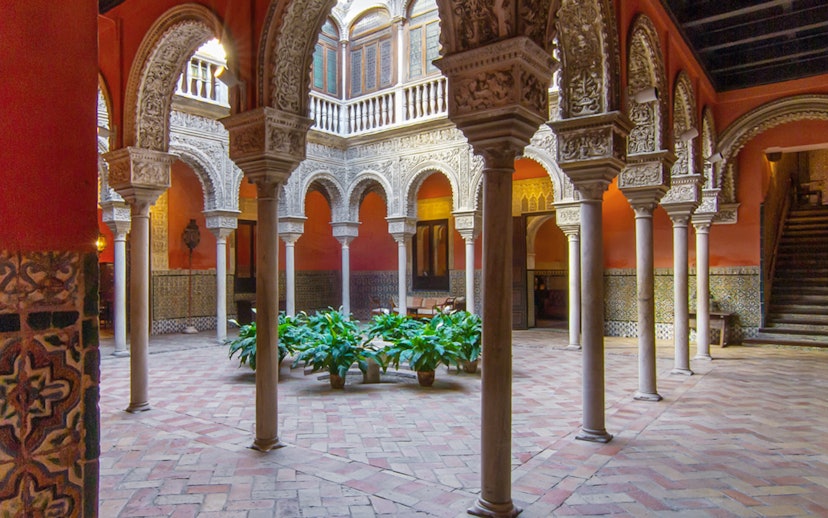
Architectural detail: Renaissance courtyard with marble columns and arches
This is the visual center of Casa de Salinas and the space most visitors remember first. The marble columns, arches, greenery, and 16th-century plasterwork give you the clearest sense of the house’s aristocratic character. What people often miss is that the courtyard is not the whole visit — it sets the tone, but some of the best details come later in the smaller interior spaces.
Where to find it: In the central courtyard at the heart of the house
Marble fountain and tiled well
Decorative feature: Courtyard fountain with technicolor-tiled well
The marble fountain anchors the courtyard and naturally becomes the most photographed feature in the house. It’s worth slowing down here because the surrounding tile work adds much of the color that balances the stone and plaster around it. Most visitors notice the fountain itself, but not the contrast between the restrained architecture and the bright ceramic detail wrapped around the well.
Where to find it: In the middle of the main courtyard
Bacchus mosaic
Theme: Roman god of wine
This mosaic in the interior patio is one of the easiest things to miss if you assume the courtyard is the main event and keep moving. It adds a different texture to the visit, linking the house’s decorative richness to older classical imagery. Because it’s not in the most obvious stopping point, many visitors pass through too quickly and only realize later they skipped one of the most distinctive details.
Where to find it: In the interior patio
Ornate wood ceilings
Craft detail: Carved and decorated ceiling work
The ceilings are one of the strongest reasons not to rush Casa de Salinas. They add vertical drama to rooms that can feel understated at first glance, and they reward the kind of slow-looking visit that this house suits best. Most people spend their time scanning eye-level tiles, columns, and windows, then leave without ever properly looking up.
Where to find it: Above the main interior rooms around the courtyard route
Stained glass and tile work
Decorative style: Color-rich interior finishes
The stained glass and colorful tiles are part of what gives Casa de Salinas its layered visual character. They’re not one single headline feature, but together they make the house feel intimate, detailed, and distinctly lived-in rather than museum-like. The easy mistake is to treat them as background decoration when they’re actually a big part of what gives the mansion its personality.
Where to find it: Throughout the interior rooms along the main route
Facilities and accessibility
- 🎧 Audio guide: Headout’s Casa de Salinas Tickets with Audio Guide includes an audio guide, which is especially useful on such a short, detail-heavy visit.
- ♿ Wheelchair access: The available visitor information confirms wheelchair accessibility.
- 🚻 Restrooms: Information unavailable.
- 🛍️ Gift shop / merchandise: Information unavailable.
- 💧 Water fountains / bottle refill stations: Information unavailable.
- 📶 Wi-Fi: Information unavailable.
- ♿ Mobility: Casa de Salinas is listed as wheelchair accessible, but details on routes, ramps, elevators, and accessible restrooms are unavailable.
- 👁️ Visual impairments: Information unavailable.
- 🧠 Cognitive and sensory needs: The short visit length may suit travelers who prefer brief, lower-effort stops, but official sensory-support details are unavailable.
- 👨👩👧 Families and strollers: Information unavailable.
Casa de Salinas works best for children as a short stop, especially if they enjoy fountains, courtyards, and colorful decorative details more than long museum visits.
- 🕐 Time: 25–45 minutes is realistic with children, and the courtyard plus interior patio are the easiest areas to prioritize.
- 🏠 Facilities: Information unavailable.
- 💡 Engagement: Ask children to spot the fountain, the Bacchus mosaic, and one ceiling detail before you move on — the house rewards that kind of slow-looking game.
- 🎒 Logistics: Bring only what you need for a short visit and pair Casa de Salinas with bigger Seville sights rather than building half a day around it.
- 📍 After your visit: Information unavailable.
Rules and restrictions
Practical tips
- Plan it as a short stop: Casa de Salinas takes about 25 minutes for most visitors, so it works best as a gap-filler between larger Seville monuments rather than a half-day plan.
- Use the audio guide from the start: The house is compact, and without context it’s easy to move through the courtyard, rooms, and patio in 10 rushed minutes.
- Look up before you move on: The ornate ceilings are one of the easiest details to miss because your eye naturally goes to the fountain, arches, and tile work at ground level.
- Give yourself 45 minutes if you like details: The standard route is short, but photos, the stained glass, and the Bacchus mosaic can easily stretch the visit beyond a quick in-and-out circuit.
- Don’t stop at the courtyard alone: The courtyard is the visual anchor, but the interior patio and surrounding rooms are what make the visit feel layered rather than one-note.
What else is worth visiting nearby?
Eat, shop and stay near Casa de Salinas
- On-site: Information unavailable.
- Better options nearby: Information unavailable.
- 💡 Pro tip: Because Casa de Salinas is such a short visit, it usually makes more sense to eat before or after your next major Seville stop rather than planning a meal around this one.
- Shopping near Casa de Salinas: Information unavailable.
- Gift shop / on-site shopping: Information unavailable.
Casa de Salinas is better treated as a short sightseeing stop than a reason to choose your hotel on its own. The smarter approach is to pick a base that works for your wider Seville itinerary, then fit Casa de Salinas in as part of a historic-center day.
- Price point: Information unavailable.
- Best for: Travelers who want to build a walkable day around several central Seville sights rather than one long single-attraction visit.
- Consider instead: Choose the neighborhood that best matches the rest of your Seville plans, since Casa de Salinas itself takes well under an hour.
Frequently asked questions about visiting Casa de Salinas
Most visits to Casa de Salinas take about 25 minutes. If you use the audio guide properly, stop for photos, and spend time looking at the ceilings, stained glass, and interior patio, you may want closer to 45 minutes.
Booking in advance is the easiest way to keep this stop quick and predictable. Current same-day sellout patterns are unavailable, but a prebooked ticket makes more sense here if you’re fitting Casa de Salinas between bigger Seville landmarks.
A small early buffer is the safest approach for a short visit like this, and around 10 minutes is a sensible target. That gives you time to sort your ticket and start the route without eating into a visit that may only last 25 minutes.
Current bag rules for Casa de Salinas are unavailable in the visitor information provided. The simplest approach is to carry a small bag only, especially if you’re adding this stop to a longer day of sightseeing around Seville.
Photography rules are not clearly listed in the available visitor information. Check locally before using flash or shooting close-ups, especially around stained glass, decorated ceilings, and other historic interior details.
A group visit is possible in principle, but current group-specific rules and arrangements are unavailable. Because the house is compact and the visit is short, smaller groups are likely to have the smoothest experience inside.
Yes, Casa de Salinas can work well for families, mainly because the visit is short and visually rich. Children are more likely to engage with the courtyard fountain, colorful tiles, and ceiling details than with a long, text-heavy museum route.
Yes, the available visitor information lists Casa de Salinas as wheelchair accessible. More detailed accessibility information — such as route layout, accessible restrooms, or on-site assistance — is currently unavailable.
Food availability inside Casa de Salinas is not listed in the current visitor information. Since the visit only takes around 25 minutes, it usually makes more sense to eat before or after rather than planning a break around this stop.
Yes, the audio guide is worth it here because the visit is short and easy to rush. It helps turn the house from a quick photo stop into a more rewarding look at the tiles, stained glass, ceilings, and interior patio details.
Make sure you don’t leave after only seeing the courtyard. The Bacchus mosaic in the interior patio and the ornate wood ceilings are the two details most visitors rush past, even though they add some of the visit’s strongest character.