Quick Information

RECOMMENDED DURATION

2 hours

VISITORS PER YEAR

1000000

Plan your visit

Did you know?

Seville Aquarium participates in conservation efforts, including breeding programs for endangered species like the Caretta Caretta sea turtle. Chelo, a rescued Caretta caretta, is a star attraction and popular mascot at the aquarium.

The aquarium focuses on both ex-situ (in the facility) and in-situ (in the natural environment) conservation. Ex situ programs involve breeding endangered animals and ensuring their well-being. In situ programs include collaborating with other organizations to protect nesting grounds for sea turtles.

The aquarium participates in public awareness campaigns. They partner with the "Here we save turtles" initiative to educate beachgoers on how to responsibly interact with sea turtles and report sightings.

Seville Aquarium zones

Guadalquivir River

The Guadalquivir River, a vital artery of Seville, flows through diverse landscapes, from its headwaters in the Sierra de Cazorla to its marshy delta near the Atlantic Ocean. This riverine journey is beautifully captured within the Seville Aquarium.

Wildlife in the Guadalquivir River Zone:

  • Common Carp: These adaptable fish are a common sight in the Guadalquivir River.
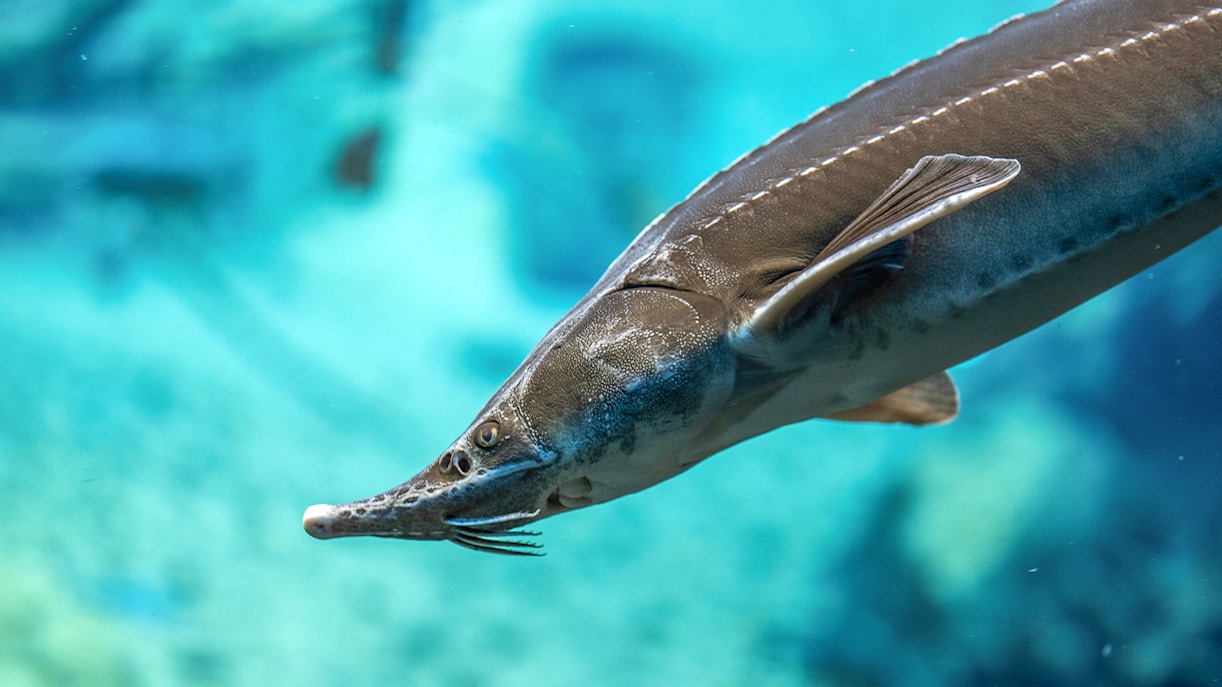
  • Adriatic Sturgeon: The Adriatic sturgeon is a critically endangered species. The aquarium's has made several efforts to conserve this species.
Atlantic Ocean

This immersive exhibit transports visitors on a journey across the Atlantic, from the shores of Andalusia to the vibrant ecosystems of the Americas. As you go through this underwater world, you'll encounter a variety of habitats, from sunlit coastal zones to the mysterious depths of the abyss.

Wildlife in the Atlantic Ocean

  • European Lobster: A prized delicacy, the European lobster is a formidable predator that roams the Atlantic seabed.
  • Triggerfish: These colorful fish, with their distinctive dorsal fins, are a common sight in the Atlantic's coral reefs.

Rainforest Zone

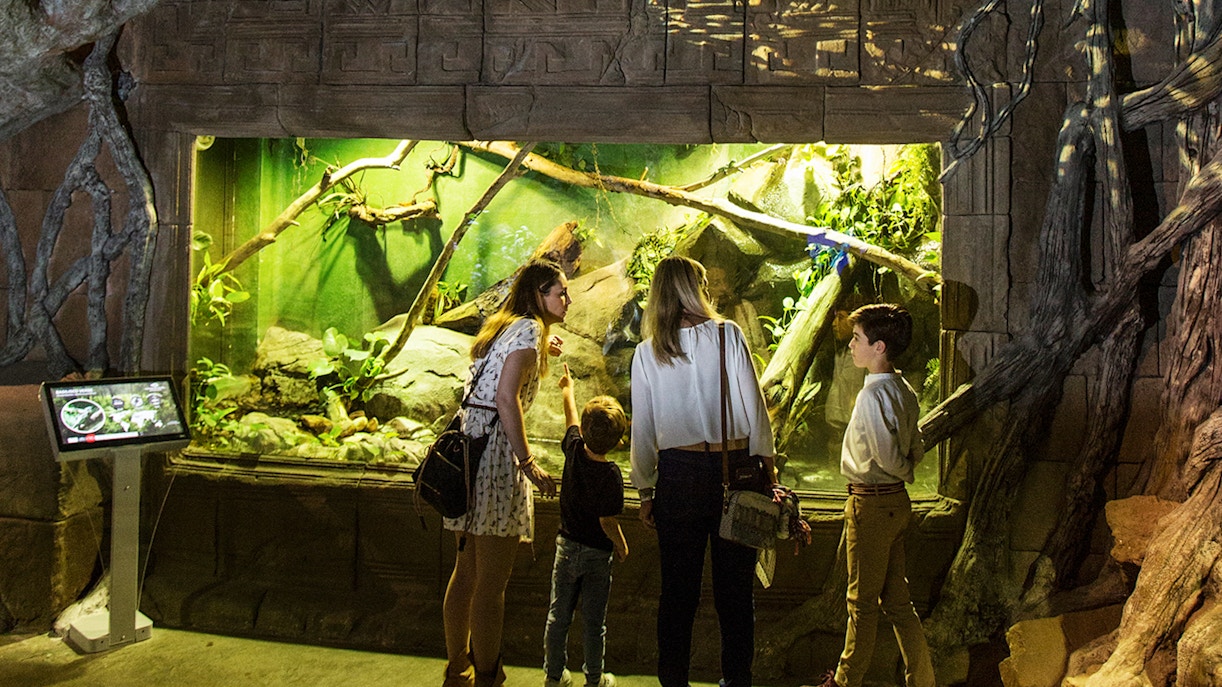
This exhibit recreates the humid, vibrant environment of these ecosystems, showcasing some of the most fascinating native species, including colorful reptiles and amphibians.

Wildlife in the rainforest zone

  • Green Iguana: A large, arboreal lizard known for its vibrant green coloration.
  • Cuban Anole: A small, agile lizard that can change color to blend in with its surroundings.
  • Green Anaconda: One of the largest snakes in the world, the green anaconda is a formidable predator.

The Oceanarium

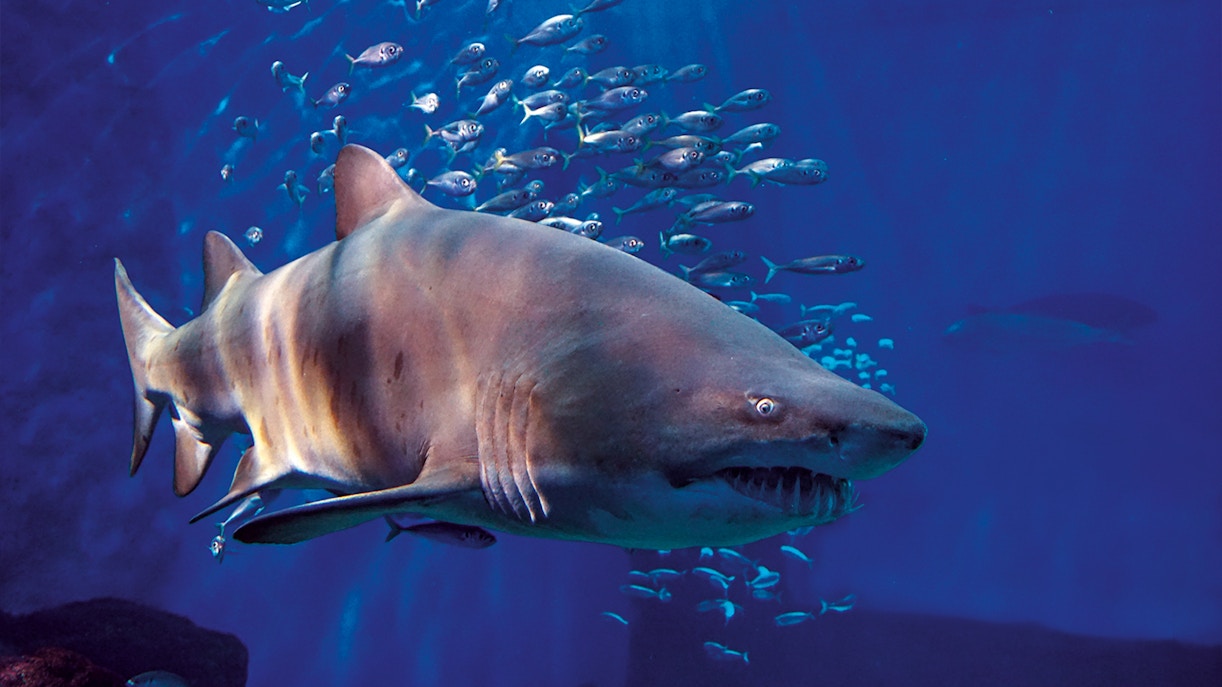
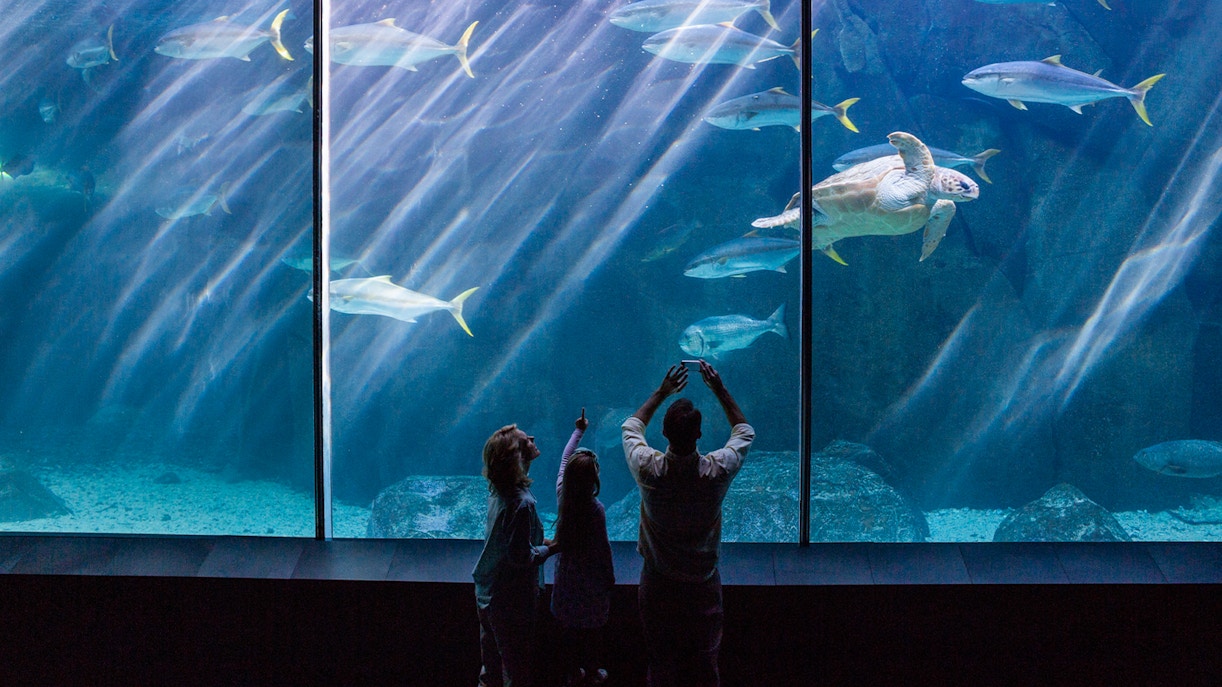
The Oceanarium at the Seville Aquarium offers a truly awe-inspiring experience, transporting visitors to the depths of the ocean. With its impressive depth and vast volume of water, this exhibit has some of the largest and most majestic creatures on Earth

Wildlife in the Oceanarium

  • Bull Shark: A powerful predator with a wide, rounded snout
  • Blacktip Shark: Known for its distinctive black tips on its fins.
  • Loggerhead Sea Turtle: One of the largest sea turtles, it is a critically endangered species.
  • Guitarfish: A unique fish that resembles a guitar, with a flattened body and a long, whip-like tail, it inhabits sandy and muddy seafloors.

Indo-Pacific Zone

The Indo-Pacific zone at the Seville Aquarium transports visitors to the vibrant coral reefs and mangrove forests of the Indian and Pacific Oceans. Explore the colorful and complex ecosystems of coral reefs, where countless species thrive.

Wildlife in the Indo-Pacific Zone 

  • Pot-bellied Sea Horse: A unique and fascinating creature with a distinctive pot-bellied appearance.
  • Surgeonfish: Known for their vibrant colors and sharp scalpel-like spines.
  • Lionfish: A venomous fish with distinctive striped fins.
  • Clownfish: A popular fish, often found living symbiotically with sea anemones.

Workshops at Seville Aquarium

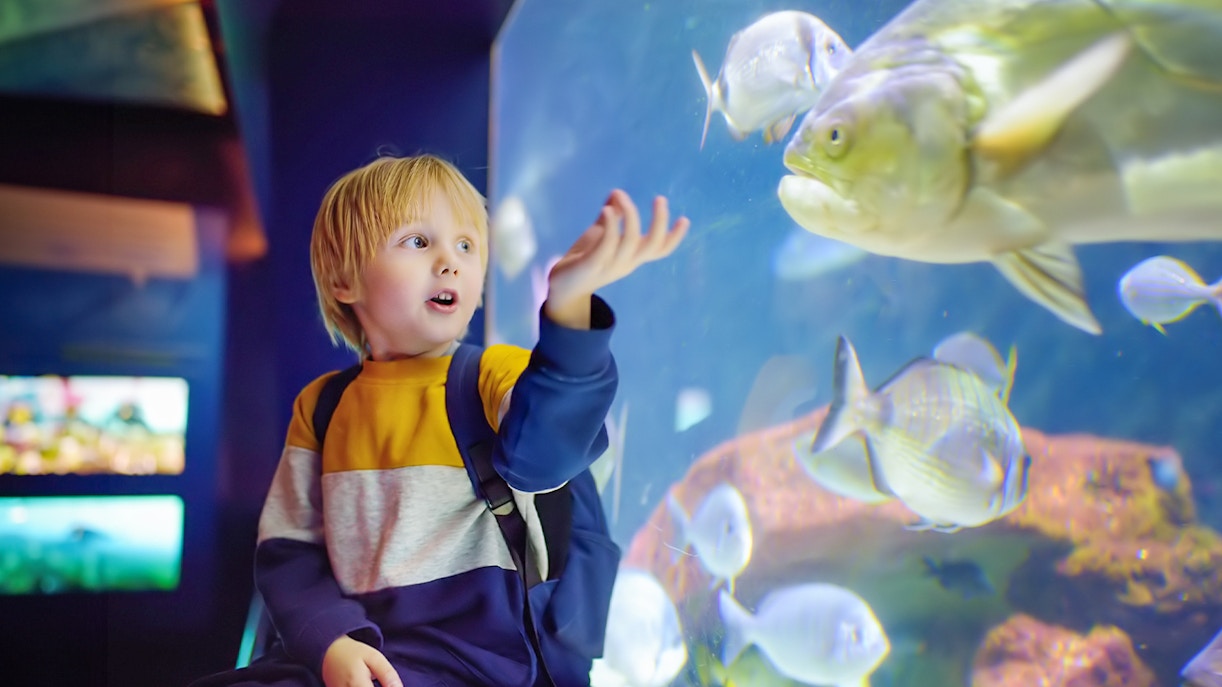
Cute Kid admiring th fishes at Seville Aquarium

Sevilla Aquarium hosts several special events throughout the year.

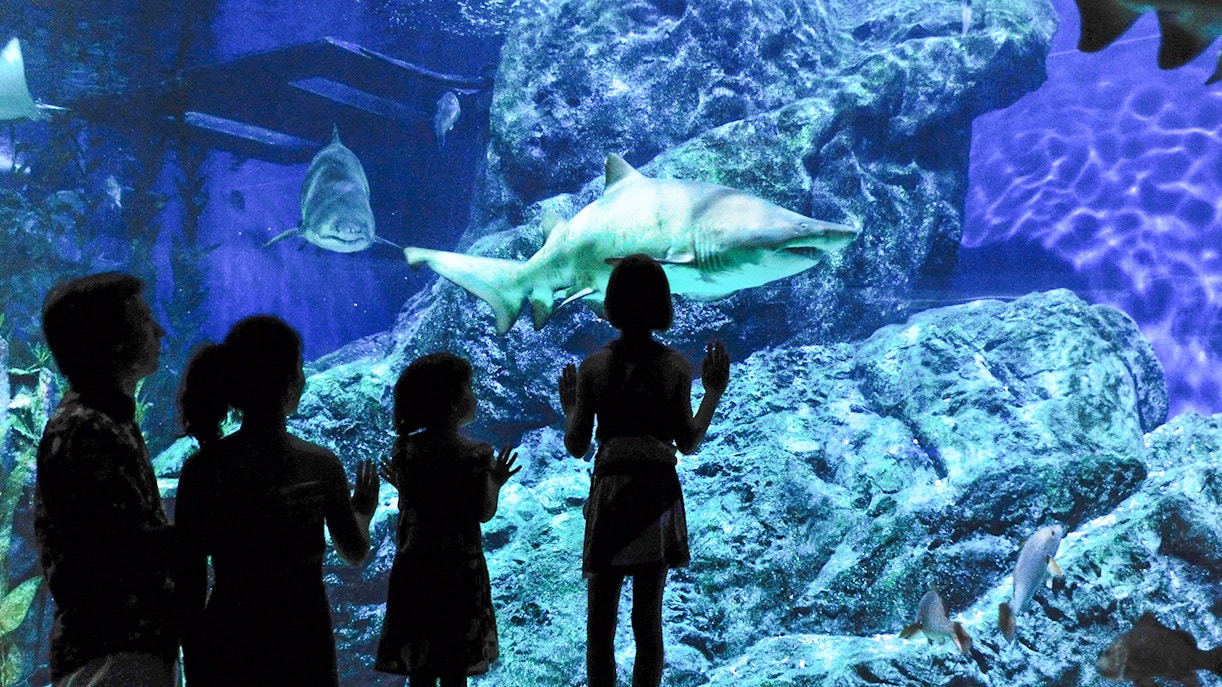
  • Night with sharks: Children can spend an unforgettable night at the aquarium with a guided tour of the exhibits, educational games, and the chance to sleep next to the nine-meter-deep shark tank. It's a unique way to learn about marine life after hours.
  • Educational workshops: The aquarium regularly organizes interactive workshops for kids and families, focusing on marine biology, conservation, and environmental protection.
  • Shark feeding: You can attend special feeding sessions to watch sharks and other marine species being fed by expert handlers. These sessions often include commentary to provide insights into the animals' behavior.
  • Oceanverse Summer Camp: The aquarium runs the Oceanverse summer camp, where children can learn about marine science by engaging in educational games, workshops, and outdoor activities related to ocean conservation and biology.
Plan your visit to Seville Aquarium

History & conservation at Seville Aquarium

Seville Aquarium opened its doors in 2014, located along the Guadalquivir River, near the historic Parque de María Luisa. The aquarium was designed to honor the spirit of exploration, with its journey following the path of Ferdinand Magellan’s first circumnavigation of the globe, which set sail from Seville in 1519. Since its opening, the aquarium has become a key educational and conservation center, home to over 400 species and featuring one of the deepest shark tanks in Europe. Its mission includes raising awareness of marine ecosystems and promoting the protection of ocean life!

Seville Aquarium is not just a fun place to visit—it's also working hard to protect our planet! It partners with other organizations to help save endangered animals and their homes.

  • They use energy-saving lights and water-saving devices.
  • They have a breeding program for animals like the Axolotl to help improve their population! them stay safe.
  • They support conservation projects such as the Oceanverse: A Camp for Ocean Conservation to protect animals in their natural habitats.
  • They spread awareness about the importance of preserving our environment through research projects, workshops, and classes.

From happy customers

Loved by 47 million+
Trustpilot rating: 4.5 out of 5
Michal Jablonksi

Michal

Jan 2026

review-image

review-image

review-image
Very nice place. Lots of fun for all family. Sharks, turtles, murenas.... ohhh and ahhh. Worth every spend Euros. Must see!
Cristina caraballo perez
ES

Cristina

Spain
Aug 2025

review-image

review-image

review-image
In general everything, the sessions as it is divided, the large pool that is communicated ppr all the way and that is set on a ship as if we were Magellan I loved it.
Scott Swift
GB

Scott

United Kingdom
Jan 2026
Fantastic displays, great interactive elements and some amazing animals we did not expect to see. Was the highlight of our trip to Seville
anne bingham
GB

Anne

United Kingdom
Dec 2025
Being able to buy a ticket which invv can life's do much and allotted times fir cathedral and palace was brilliant. Great to also have Aquarian and tango museum and hop on hop of bus. Great 48 hours ticket

Plan your visit to Seville Aquarium

Seville Aquarium opening hours

Winter (September to June):

  • Monday to Friday: 10am - 6pm
  • Saturday & Sunday: 10am - 7pm

Summer (July & August):

  • Monday to Friday: 10am - 7pm
  • Saturday & Sunday: 10am - 8pm

Special Hours: December 24, 31, and January 5 from 10am to 4pm, December 25, January 1, and January 6 from 12pm to 6pm

Last entry: 1 hour before closing.

More about Seville Aquarium opening hours

Where is Seville Aquarium located?

Address: Muelle de las Delicias, s/n, 41012 Sevilla, Spain

Find on map

  • By Bus: Take Tussam line buses 3, 6, or 34 to Paseo las Delicias. From there, it's a 15-minute walk to the aquarium.
  • By Hop-on Hop-off bus: The Seville Hop-on Hop-off bus has a stop at the Seville Aquarium. This is a convenient option for exploring other attractions in the city.
  • By Metro: Get off at the Puerta Jerez Metro stop. It's a 20-minute walk from there to the aquarium.
  • By Bike: The aquarium is well-connected to the bike lanes on Av. Santiago Montoto.
  • By Car: You can reach the aquarium by car via A4 and Av. de las Razas. There's a paid underground car park in the aquarium (enter via Av. Molini).
Directions to Seville Aquarium

Frequently asked questions about Seville Aquarium

The best time to visit Sevilla Aquarium is during the summer months (July and August) when the opening hours are longer and you can avoid the crowds. However, if you prefer cooler weather, you can visit during the spring or fall.