Metropol Parasol sits directly above 1st-century Roman ruins and Moorish remains. Construction workers discovered the site in 2003, turning a renovation project into one of Spain's most significant archaeological finds.

Metropol Parasol sits directly above 1st-century Roman ruins and Moorish remains. Construction workers discovered the site in 2003, turning a renovation project into one of Spain's most significant archaeological finds.

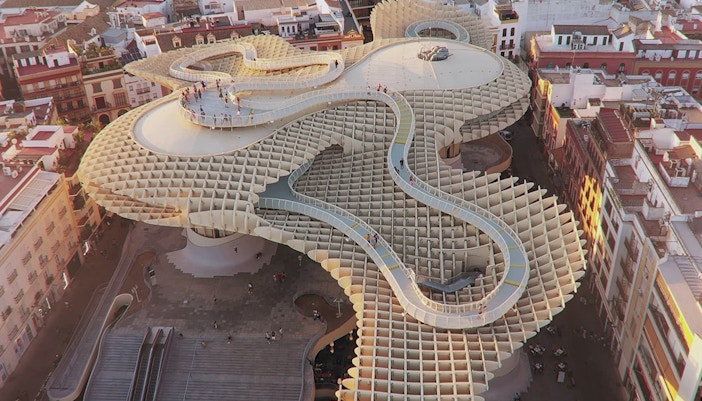
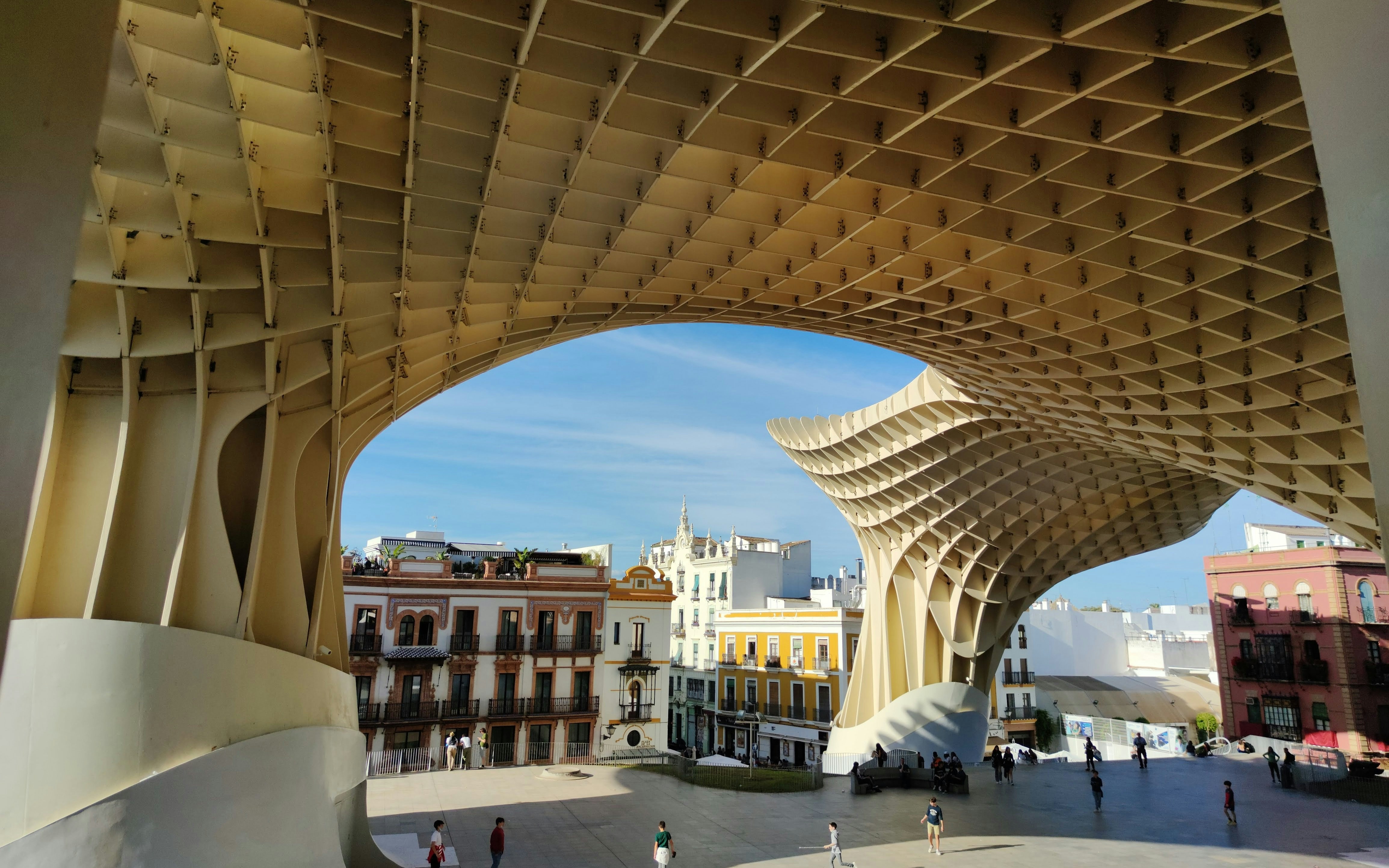
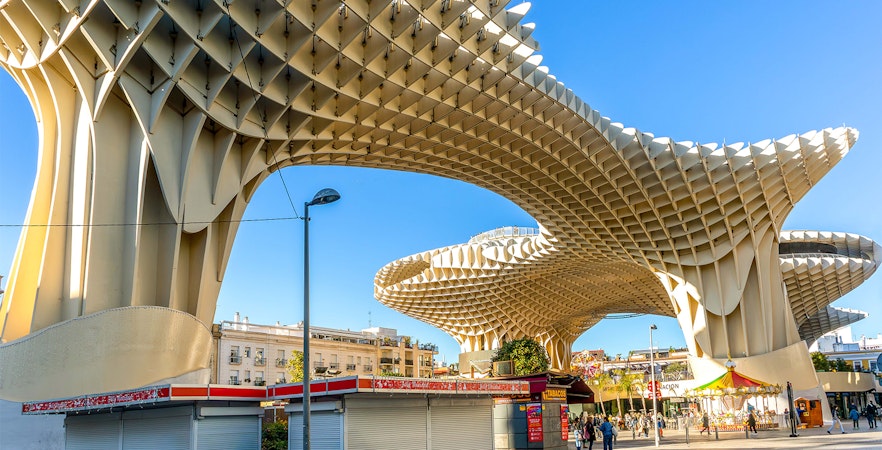
Setas de Sevilla holds the record for the largest wooden structure ever built — 150 metres long, 70 metres wide, and 28 metres tall, made from over 3,400 bonded timber modules.

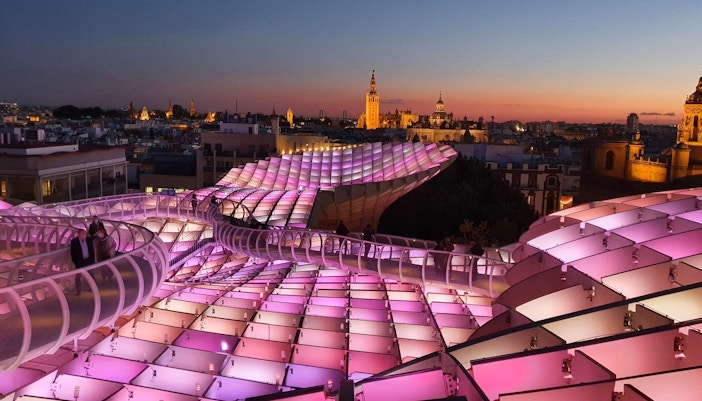
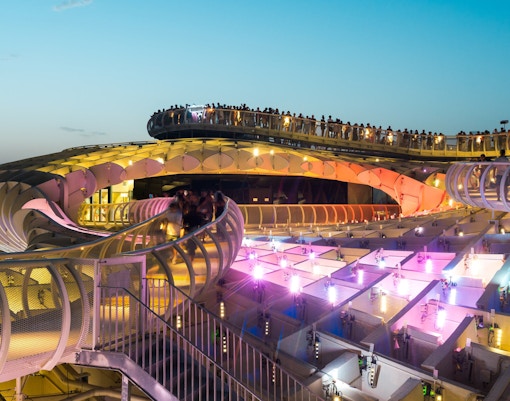
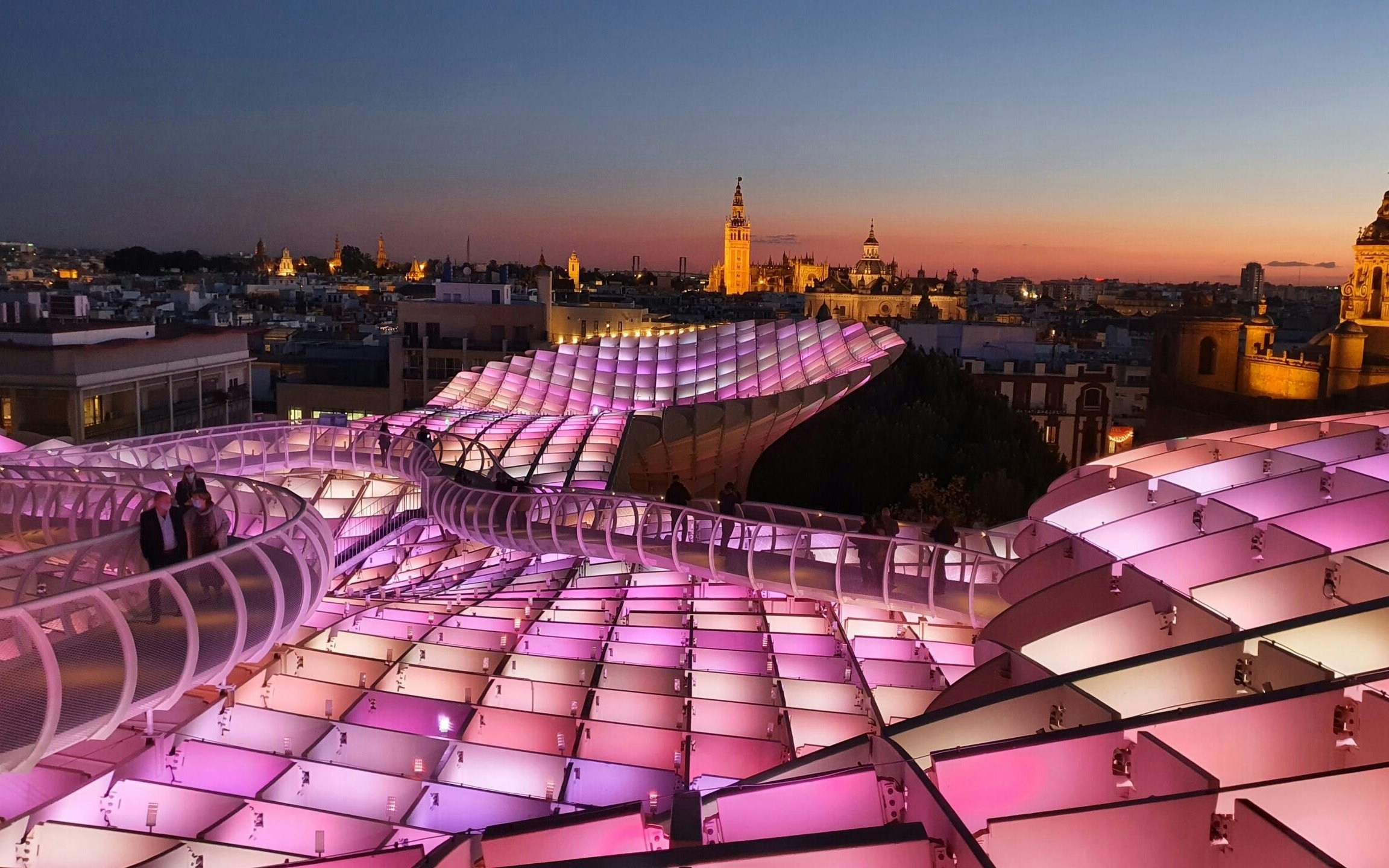
Aurora, the nightly LED light display projected across the structure's underbelly, is powered by a generative AI algorithm that produces a completely unique sequence every single evening — no two nights are ever the same.

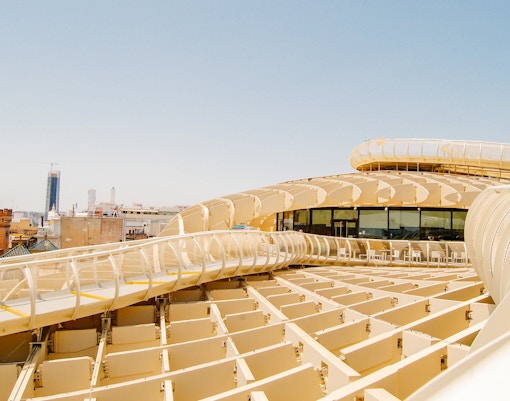
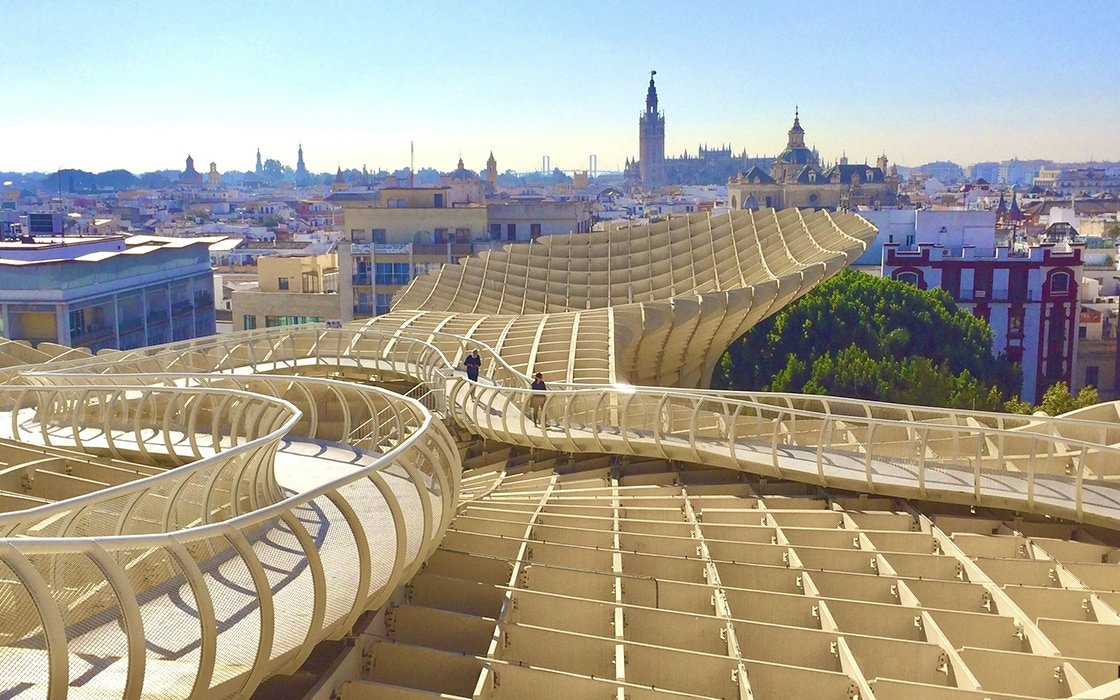
The centrepiece of any visit. At 27 metres high, a 250-metre timber path curves through all six mushroom canopies in a single looping route, with unobstructed views of the Giralda, Triana, the Guadalquivir, and the old city rooftops. Come late afternoon for the best light, or return in the evening to catch the sun setting over Triana from the western curve.

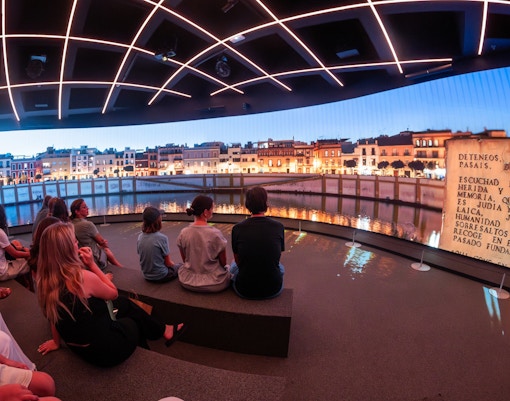
A 15-minute immersive show that's hard to categorise. A 21x3m curved HDR screen fills your field of vision, projections cover the floor, ambisonic audio surrounds you, and a scent system releases Sevillian aromas — orange blossom, azahar, the warmth of the city in spring. It's closer to being inside Seville than watching a film about it. Included with every entry ticket, running on timed slots throughout the day.

After sunset, the underside of the Metropol Parasol becomes an outdoor LED canvas. Powered by a generative AI algorithm, Aurora creates a completely new light sequence every night — no show is ever repeated. Every entry ticket includes a free return visit within 48 hours, so you can experience the structure by day and come back after dinner for the night show without paying twice.

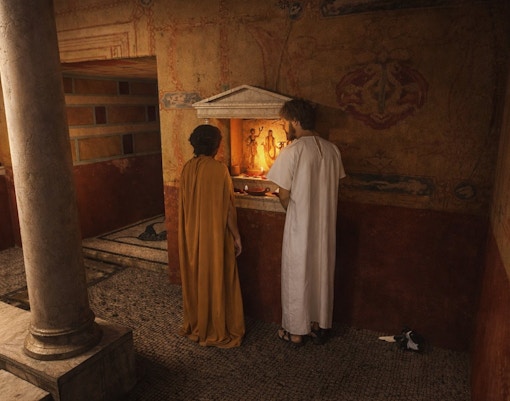
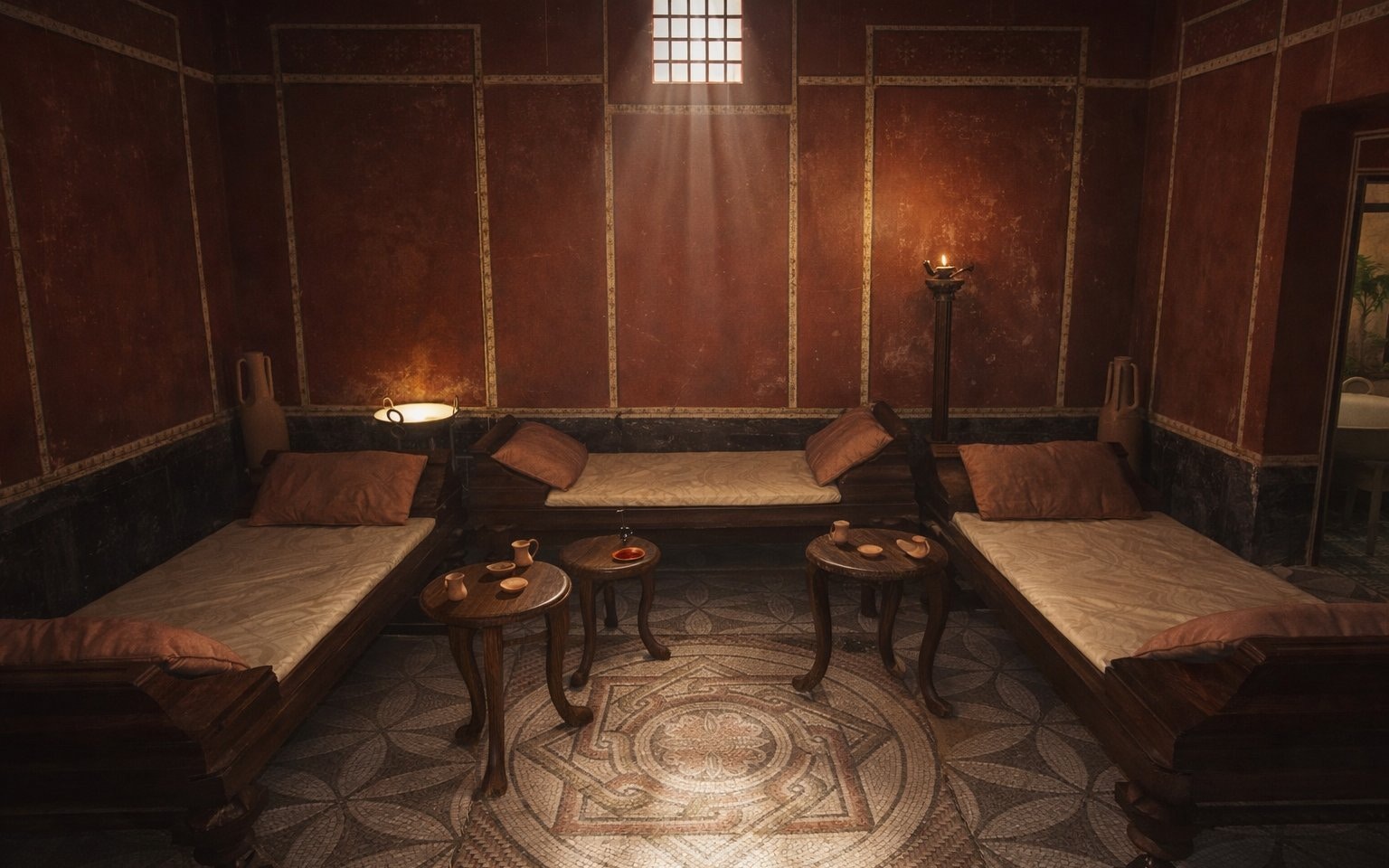
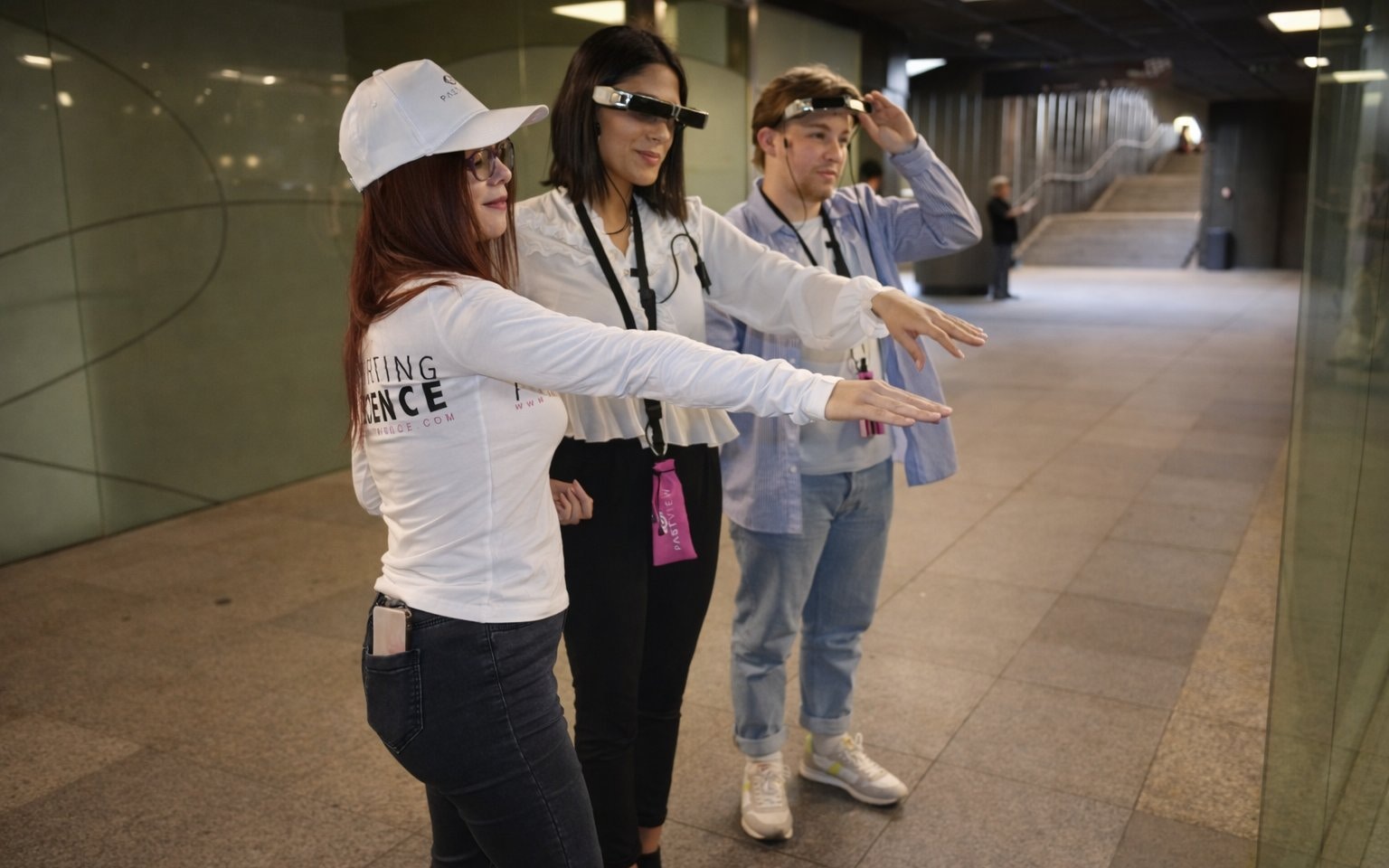
Directly beneath the structure, the Antiquarium preserves in-situ Roman and Moorish remains from ancient Hispalis, spanning the 1st century BC to the 5th century AD — floor mosaics, ceramics, and building foundations discovered during construction in 2003. It requires a separate ticket and takes around 20–30 minutes to explore. On the guided tour, the rooftop VR smartglasses experience is designed to connect these ruins with the ancient city reconstructed over the modern skyline above.

Unobstructed panoramic views of the Giralda, Triana, the Guadalquivir, and Seville's old city from 27 metres.


The story of Setas de Sevilla begins with a much more ordinary intention: the renovation of a crumbling 1970s underground car park beneath Plaza de la Encarnación. In 1990, Seville's city council approved a plan to redevelop the square. The project stalled repeatedly through the decade, and in 2004, the council held an international architectural competition for a new mixed-use structure on the site.
German architect Jürgen Mayer H. won the competition with a concept for a large timber parasol structure that would house a new market, restaurants, and a public rooftop walkway. Construction began in 2005. Almost immediately, workers discovered extensive Roman and Moorish archaeological remains beneath the plaza — finds significant enough to pause and redesign the project to incorporate an underground museum. The Antiquarium museum was built around the ruins in place.
Construction was completed in 2011 after multiple delays and cost overruns, with the final budget reaching approximately €102 million. Seville's public reaction was polarised at first — the nickname Las Setas (The Mushrooms) captured both affection and scepticism about a modernist structure in the middle of a 16th-century city. Within a few years, however, Setas de Sevilla had become one of the most visited attractions in Andalucía.
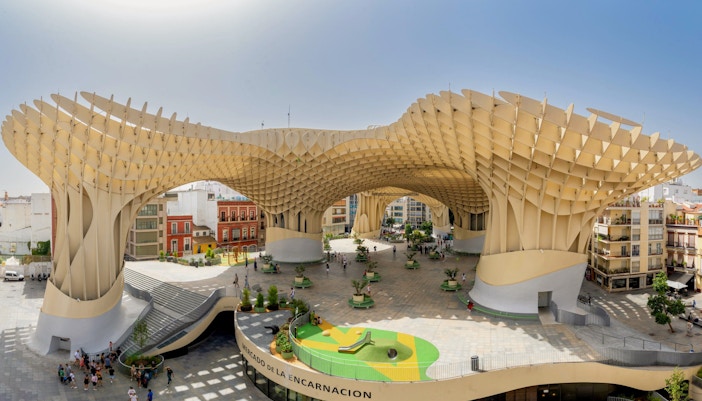
They are the same place. Metropol Parasol is the official architectural name. Setas de Sevilla — or simply Las Setas — is the local nickname, taken from the structure's mushroom-like shape. Both names refer to the same building on Plaza de la Encarnación.
No. The Antiquarium, the Roman and Moorish archaeological museum located beneath the structure, requires a separate entry ticket. It is accessed from ground level before you take the lift to the walkway. Allow 20–30 minutes for the visit.
Aurora is an AI-generated outdoor LED light show projected across the underside of Metropol Parasol after sunset. It starts roughly at 9pm in summer and around 7pm in winter, depending on sunset times. Your entry ticket includes a free return visit within 48 hours to see it.
Most self-guided visits with the entry ticket take 1.5–2 hours, including the walkway and Feeling Sevilla. Guided tours run 2–2.5 hours. If you plan to return in the evening for Aurora, budget an additional 45–60 minutes for that visit.
Yes. The structure is fully lift-accessible and the rooftop walkway, Feeling Sevilla show, and Aurora evening display are all family-friendly experiences. Children tend to find the Feeling Sevilla scent and projection show particularly engaging. The Antiquarium museum is also suitable for older children with an interest in Roman history.
Feeling Sevilla is a 15-minute indoor multisensory show inside Metropol Parasol. It runs on a 21x3m curved HDR screen with floor projections, ambisonic spatial audio, and an air system that diffuses personalized Sevillian scents — orange blossom, azahar — during the experience. It is included with all entry tickets and runs in timed slots throughout the day.

Setas de Sevilla Skip-the-Line Guided Tour